







B2B marketing is in a measurement crisis.
Marketing budget reviews rarely stay strategic for long. They become a test of whether your numbers hold up. As expectations rise, so does pressure—and budget conversations are where that pressure becomes most visible.
“Attribution is a data model. It came from the world of statistics,” says Nadia Davis, VP of Marketing at CaliberMind.
Revenue intelligence platforms like CaliberMind help reconcile marketing, sales, and finance data into a consistent, governed view—so teams can answer questions across every level of decision-making without jumping between systems.
- Why marketing budget reviews turn into audits
- Run a revenue data trust audit before budget season
- Establish a board-ready revenue reporting baseline
- Deliver Goldilocks reporting by role
- How to democratize revenue data without losing control
- Build a repeatable budget defense narrative
- Frequently Asked Questions (FAQs)
- Bottom line
Why marketing budget reviews turn into audits
Budget conversations break down when confidence in the data breaks down. That loss of confidence builds over time as expectations increase, metrics conflict, and reporting becomes harder to reconcile.
- Revenue accountability increases scrutiny
Marketing is now expected to prove revenue contribution in financial terms. Questions span every level—from campaign performance to long-term allocation decisions.
- Conflicting metrics erode trust
When marketing, sales, and finance report different numbers, credibility erodes quickly. Even small discrepancies force teams to defend definitions instead of outcomes.
- More dashboards don’t fix data problems
Most tools only see part of the picture—limited to specific platforms or surface-level engagement. Adding dashboards doesn’t fix this. It multiplies inconsistency.
Marketers end up switching between tools, systems, and spreadsheets as they try to reconcile numbers that were never designed to align.
“Every platform just sees what they see … and they kind of pretend that this is the lay of the land,” Davis explains.
Recent research reinforces this disconnect. The CMO Survey shows increasing pressure on marketing leaders to demonstrate ROI. HubSpot also reports that measuring ROI is marketers’ top challenge. Meanwhile, McKinsey finds that 70% of CEOs evaluate marketing based on revenue and margin, compared with just 35% of CMOs, highlighting a persistent measurement gap.
That said, the most effective teams validate the data behind their story before budget season begins. The following steps ensure your numbers are consistent, defensible, and ready for scrutiny.
Run a revenue data trust audit before budget season
Before defending the budget, validate the data behind it. Start with a simple question: would your numbers hold up under scrutiny from finance or the board?
“We operate in the unit of dollars. We gave you dollars. Can you explain how these dollars match the output?” Davis says.
- Establish the marketing lifecycle stages.
Confirm the stages that happen before an opportunity is opened and define which engagement signals progress accounts from marketing qualified to sales accepted and pipeline - Align pipeline and revenue definitions.
Pull pipeline reports from marketing and sales. If totals don’t match, standardize definitions and stage criteria.
- Eliminate duplicate and missing records.
Run a CRM deduplication audit and enforce account ownership rules.
- Validate stage movement and timestamps.
Audit recent deals and fix inconsistent lifecycle data.
- Reconcile numbers across teams.
Compare CRM, finance, and marketing reports and resolve discrepancies.
Establish a board-ready revenue reporting baseline
Once data is aligned, reporting must be consistent and defensible. Teams need to answer operational and strategic questions without rebuilding reports or switching contexts.
Platforms like CaliberMind standardize data and attribution so reporting is repeatable and explainable at the board level.
- Focus on pipeline created, influenced, and revenue impact: Build a quarterly view of pipeline attributed to and influenced by marketing efforts, and closed revenue to identify what drives net-new opportunities.
- Prioritize repeatability over complexity: If reports require manual fixes before every QBR, simplify and standardize them.
- Tie metrics directly to decisions: Remove any metric that doesn’t drive a budget or investment decision.
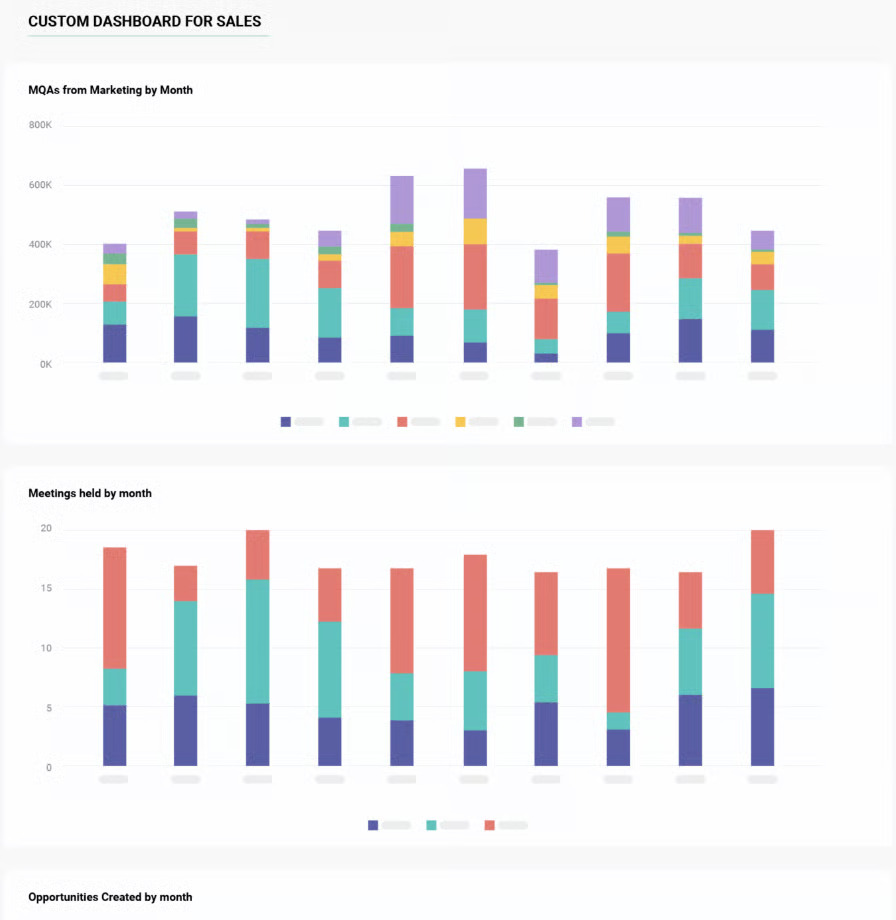
Deliver Goldilocks reporting by role
Not every stakeholder needs the same level of detail. Effective reporting delivers full-spectrum insight without overload.
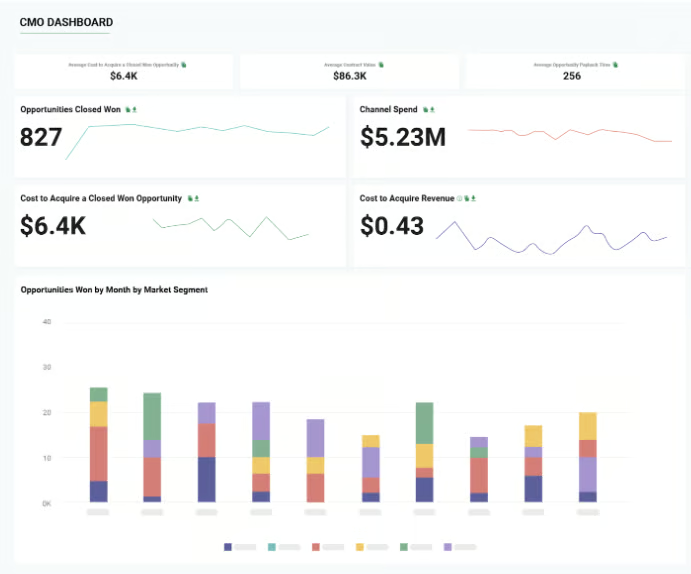
Executive reporting focused on outcomes
Executives need clarity on pipeline, revenue, and return, not methodology. Use a one-page view to guide budget shifts.
RevOps reporting focused on methodology
RevOps teams need transparency into how numbers are calculated, including attribution models and data sources. Maintain documentation to trace discrepancies.
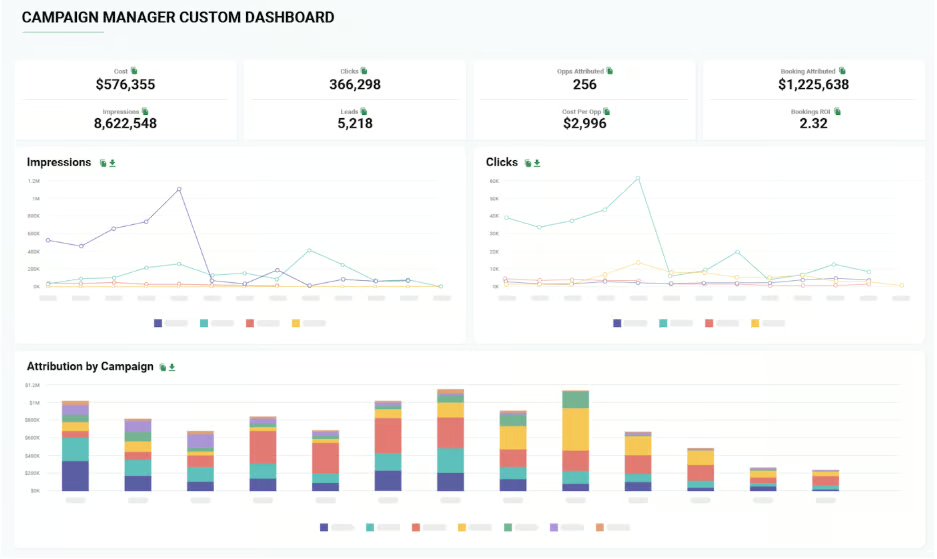
Team reporting focused on optimization levers
Marketing teams need actionable insights, such as channel performance, campaign impact, and conversion drivers. Use conversion data to refine targeting and spend.
How to democratize revenue data without losing control
Scaling insight requires not only access but also discipline. Here’s how you can do it:
- Provide self-serve access with guardrails: Allow filtering, but lock core metric definitions.
- Maintain a single source of truth: Align CRM and finance data into one governed model.
- Prevent metric drift with governance: Version-control changes to definitions and models.
Build a repeatable budget defense narrative
Strong data isn’t enough—you need a narrative that holds up under pressure.
“Attribution isn’t a religion; it’s more like we gave you money—how did you spend it, and what was the outcome?” Davis says.
Connect spend to pipeline movement
Show how major channels translate spend into pipeline and revenue.
Example: Take your top three channels and show how each $1M in spend translates into pipeline created, stage progression, and closed revenue. Then, use that to justify increasing or reducing investment.
Use attribution to support the story
Map touchpoints across closed-won deals to show combined impact.
Example: Pull a sample of closed-won deals and show the sequence of touches (ads → webinar → SDR → meeting) to demonstrate how multiple programs contributed—not just the last touch.
Answer executive “what-if” questions
Model how budget shifts affect pipeline and revenue.
Example: Build a simple model showing how a 10–20% budget shift from low-converting channels to high-converting ones would impact pipeline and revenue based on historical performance.
Frequently Asked Questions (FAQs)
How do marketers prove revenue impact to finance?
By aligning reporting to pipeline and revenue, using consistent definitions, and tying activity to outcomes that the finance department recognizes.
What revenue metrics matter most for budget approval?
The revenue metrics that matter most for budget approval include pipeline created, pipeline accelerated, conversion rates, deal velocity, cost of acquisition, and revenue contribution.
What’s the difference between pipeline created and influenced?
Pipeline created refers to opportunities sourced by marketing. Pipeline influenced, on the other hand, includes deals where marketing contributed but didn’t originate the opportunity.
How much attribution detail should executives see?
Executives should only see attribution details that support decisions. High-level summaries are more effective than detailed methodology.
How do you fix revenue data trust issues quickly?
Align definitions, clean core data, reconcile totals across teams, and standardize reporting to fix problems with revenue data trust.
Bottom line
Budget defense is all about presenting data that holds up under scrutiny.
When marketing, sales, and finance align around a consistent, governed view of revenue, conversations shift from justification to strategy—and marketing earns not just budget approval, but also executive trust that Marketing will invest it wisely and effectively to advance business goals at large.
For a deeper look at how today's leading teams are navigating these measurement challenges and standardizing their data models, explore our latest research in the 2026 State of Attribution Report. Download the full report to see the benchmarks and trends shaping the next era of revenue accountability."
