When ‘good content’ sends the wrong signal |
We’ve all published a post and thought, “This one is going to land.”
It gets likes. Comments. Maybe even a share. And then… silence. No meetings, no replies, no pipeline movement.
That disappointment usually comes from confusing awareness with demand. Awareness means you’re on their radar. Demand is full on Veruca Salt: They want it, and they want it now. |
|
|
On Tuesday, we talked about thought leadership and social credibility. Today, we’re looking at the gap between visibility and buyer intent and why expecting a single post to raise awareness and generate demand is the quickest way to frustrate marketing and sales.
If your best content isn’t generating pipeline, it isn’t because it isn’t good enough. It’s because it’s doing the wrong job. So let’s look at how to move people from “I saw your post” to “Let’s talk.” |
|
|
Turning awareness into action |
Buyers need help walking the path from “interesting idea” to “this matters for me,” and that’s where strong sales follow-through makes all the difference. To do that effectively, it helps to focus on what engagement really means. 1. Treat engagement as interest — not intent
A like or comment means the topic resonated, not that someone is ready for outreach. Look for repeated interaction or explicit buying signals before stepping in. |
2. Create continuity by referencing marketing’s content When you weave a prospect’s activity or engagement with your content into your outreach, it feels relevant instead of random. |
3. Help buyers understand the problem behind the post
Awareness introduces an idea; demand forms when a buyer connects that idea to their own pain points. Guide them toward that connection by explaining how their pain point is matched with specific products, services, or resources. |
4. Match your message to the buyer’s stage
Early-stage prospects need perspective, while late-stage prospects often need proof. Sending the wrong content at the wrong time slows momentum. |
|
|
Awareness opens the door. Demand walks buyers through it. |
1. Define what each piece of content is for
Awareness content should help people recognize themselves in a problem or POV. Demand content should help them recognize why it matters now. |
→ If the goal isn’t clear, expectations get messy, and teams misread success. |
2. Use social as a spotlight — not a conversion engine
A high-performing post reveals what buyers care about, not who’s ready to talk. Lean into those signals. If a topic consistently resonates, it’s a hint that mid-funnel content is missing. |
3. Build demand with content that reduces ambiguity
When budgets are selective and teams are cautious, buyers crave clarity. Demand grows when content explains what, why, and how. Specifically: |
→ What the problem actually costs. Why it matters in this moment, and how outcomes change with the right approach. |
Simplifying the decision-making process is the most valuable thing you can offer.
4. Create handoff moments between marketing and sales Marketing captures attention, while sales enhances relevance. Effective demand engines are intentionally designed to create connections between both. |
|
|
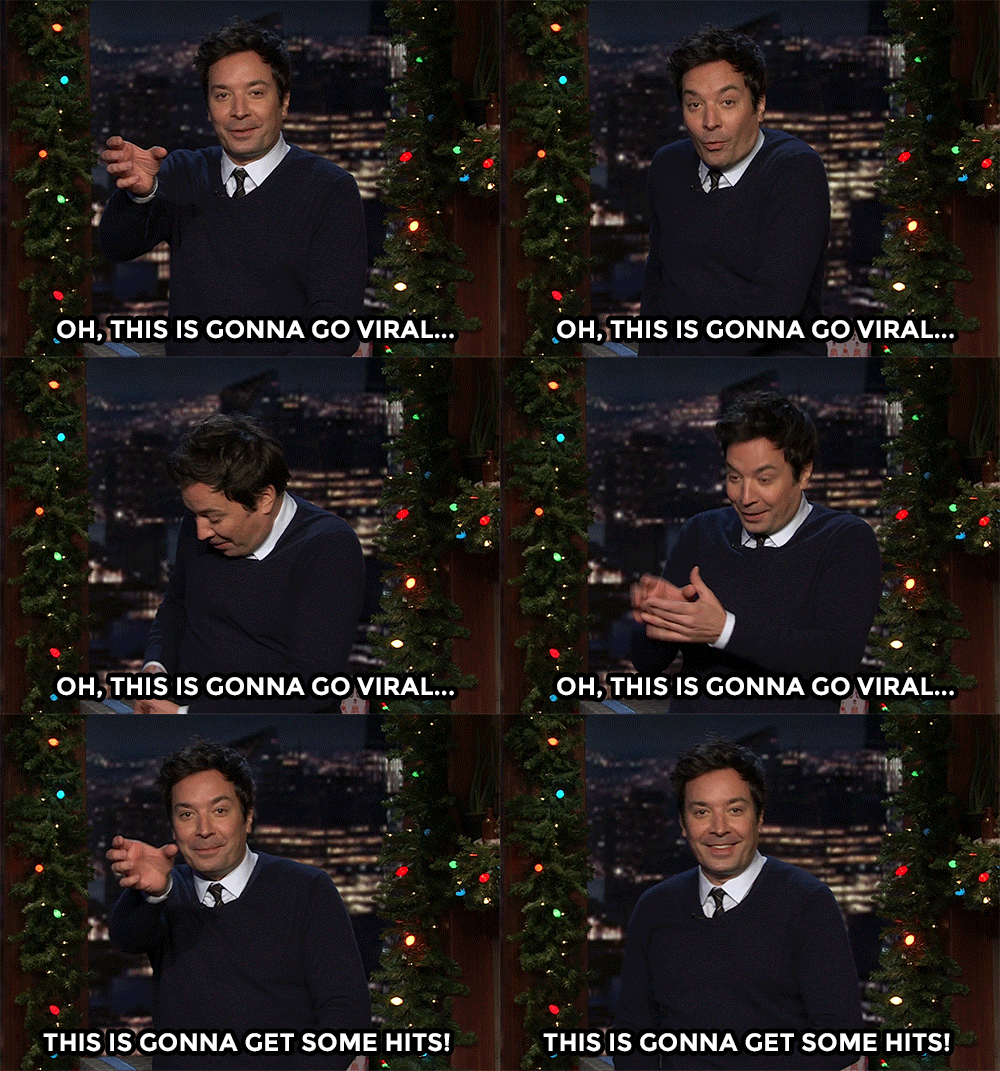
Marketing: “This post blew up — huge win for awareness!”
Sales: “Perfect. When do the meetings start?” |
|
|
Meanwhile, on Reddit, someone posts: “My viral post didn’t generate a single lead. Help?”
Translation: Awareness is the start of the journey, not the finish line. High-performing posts tell you what topics your audience cares about, not who’s ready to buy. Do the work to analyze intent and categorize buying signals to unlock the true meaning behind viral social engagement. |
|
|
|
Faithe has spent more than a decade helping people understand the tools that move business forward. With a Ph.D. in Communication Studies, she breaks down project management, office tech, and social platforms into practical insights for sales and marketing teams. |
|
|
Selling Signals is a TechnologyAdvice business © 2025 TechnologyAdvice, LLC. All rights reserved. TechnologyAdvice, 3343 Perimeter Hill Dr., Suite 215, Nashville, TN 37211, USA. |
|
|
|