Turn your top blogs into conversion assets |
Yesterday’s issue featured the 2025 Selling Signals Wrapped, which made it clear that the content that resonated most in 2025 was not flashy. It was useful. It helped buyers move forward on their own terms.
And the stakes are higher than ever going into 2026. In 95% of cases, buyers ultimately purchase from one of the four vendors already on their Day One shortlist, which means your “first impression” often happens long before your first call. |
|
|
Meanwhile, 82% of marketers say it’s somewhat or very challenging to generate responses from lead nurturing programs, even when campaigns are running, and content is being published.
Faithe’s big takeaway for 2026 builds on that. She challenged teams to create content that answers the question, “What should I do next?” and to audit content for AI readability. That’s exactly what I want to zero in on today because Q1 is when teams either reset with intention or carry the same messy habits into a new year.
Today’s issue is your Q1 content upgrade guide that will help sales and marketing work from the same reality and give buyers the decision clarity they need to choose you. |
|
|
Sell with a ‘What Should I Do Next?’ playbook |
If Q1 is your reset, the sales team’s job is to make buying feel easy.
Buyers aren’t waiting for a rep to define the category anymore. They’re defining it themselves. In fact, 83% of buyers establish purchase requirements before contacting sales, which means your job is rarely “discovery.” It’s interpretation, tradeoffs, and helping them choose.
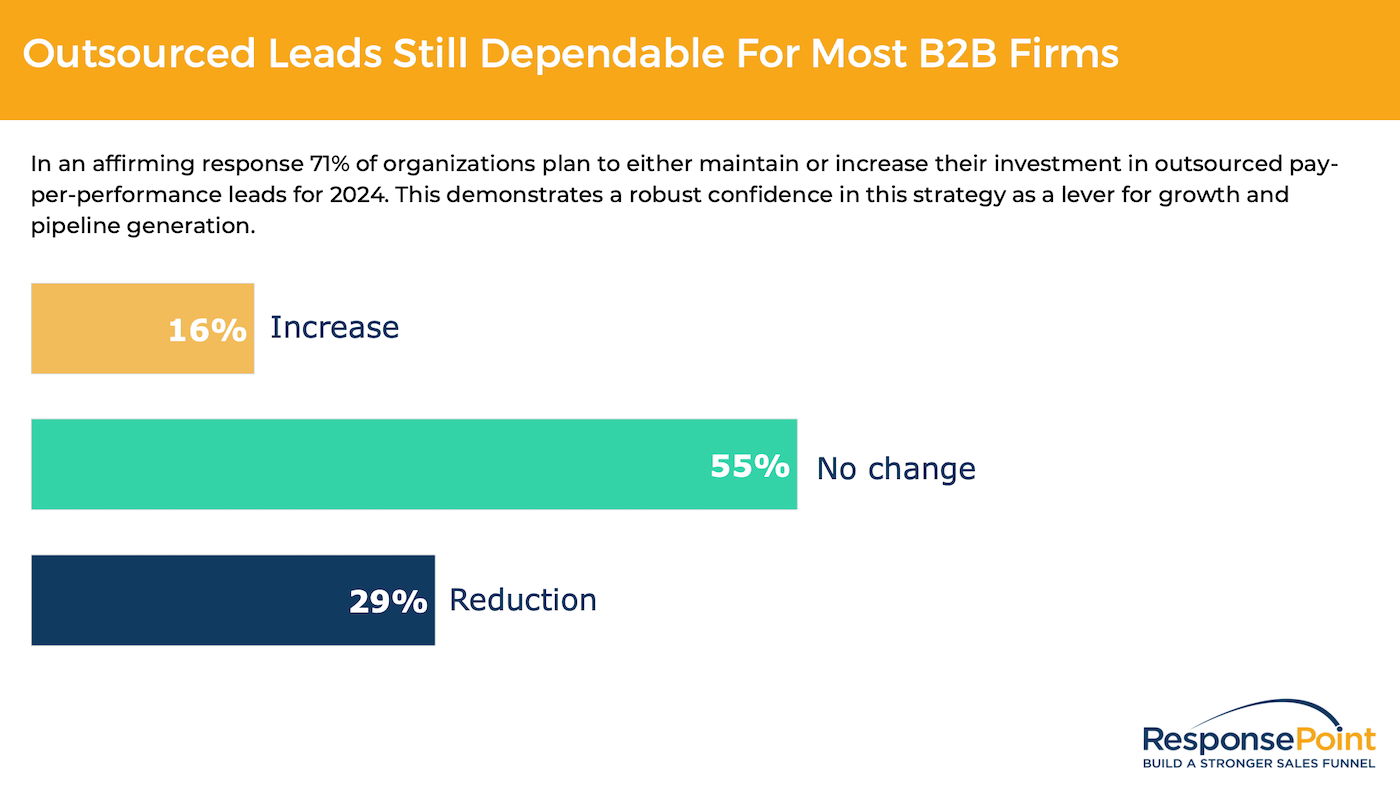
The volume problem is also real, given that 71% of organizations previously planned to maintain or increase investment in outsourced pay-per-performance lead programs. Since then, your prospects have been seeing more outreach, not less. Your advantage is relevance rather than activity. |
Outsourced leads are still a major pipeline lever: 71% of B2B organizations planned to maintain or increase investment in pay-per-performance lead programs in 2024. (Source: ResponsePoint) |
Faithe’s biggest point applies directly to sales: If marketing is creating “what should I do next?” content, then sales needs to use it like a map. Not as a link dump but as the next step in the buyer’s journey. |
Here’s your Q1 reset checklist. ✈️ Leave it in 2025 |
- Starting Q1 with a pipeline full of “maybe” deals
- Sending generic January follow-ups that feel copy-pasted
- Treating buying groups like a single-thread conversation
-
Keeping objections trapped in reps’ brains instead of shared systems
- Sharing content that feels vague, bloated, or hard to forward internally
|
-
Kick off Q1 with a pipeline reality check. Confirm next steps, update stages, and close out anything that is not real.
- Run an “Objection of the Week” loop. Collect the top sales objections you heard and send them to marketing as a content request.
-
Turn content into next steps. Replace “checking in” with a resource that moves the deal forward, such as a checklist, trade-off guide, or implementation plan.
- Sell to the group, not just the champion. Ask who else is involved and send tailored assets to match each stakeholder’s role.
-
Use content that works in AI search and internal sharing. If a buyer can skim it fast and forward it easily, it becomes your best sales assistant.
|
In Q1, the strongest sales teams are not the ones who hustle harder but those who guide smarter and send follow-ups that help buyers take the next step. |
|
|
From help content to decision content |
If 2025 taught us anything, it’s that “helpful” content is not enough anymore. Buyers want content that helps them decide. And when sales and marketing are aligned, that shift becomes measurable.
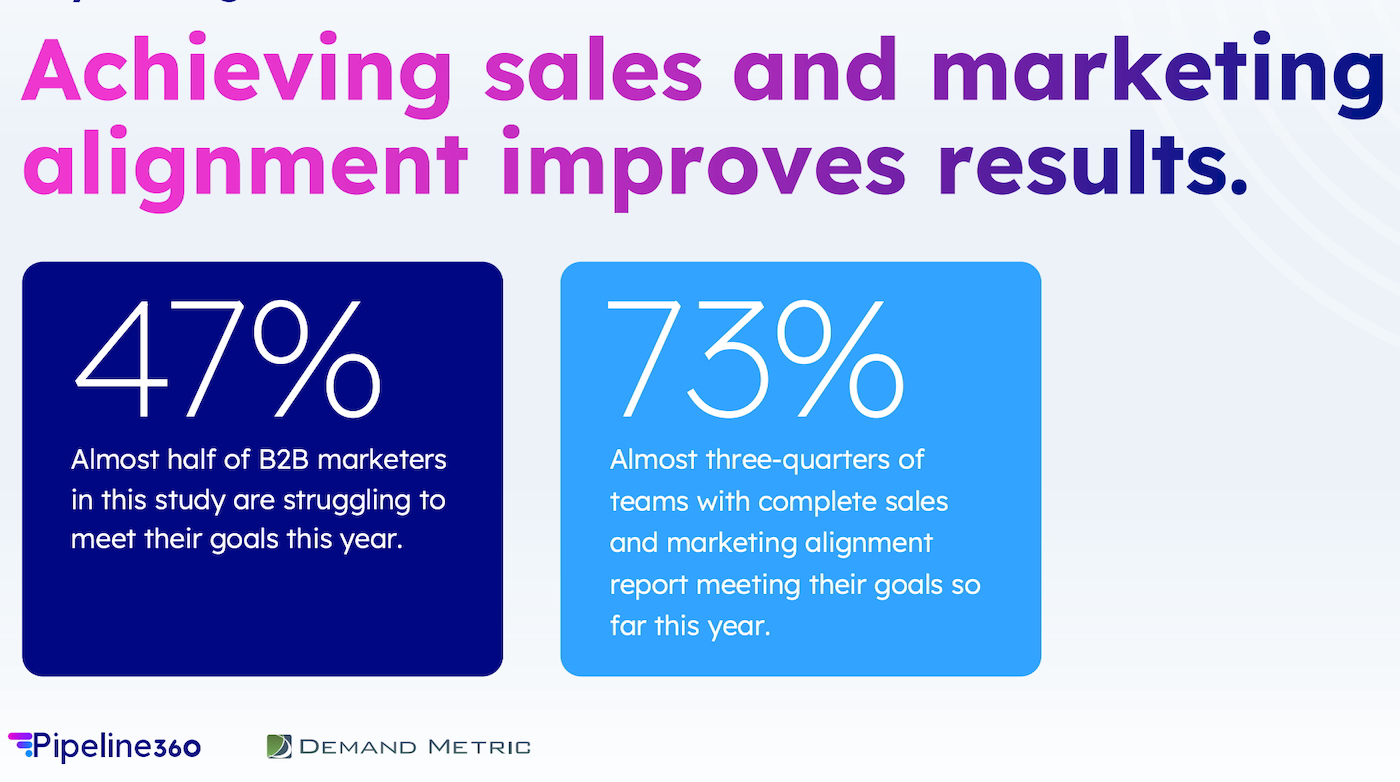
In fact, 73% of teams with complete sales and marketing alignment report meeting their goals, while 47% of B2B marketers overall struggle to meet goals. That gap is your proof point that alignment is not just a soft skill but is a performance lever. |
Sales and marketing alignment pays off: 73% of fully aligned teams are meeting goals, compared to 47% of B2B marketers overall struggling to hit theirs. (Source: Pipeline360 + Demand Metric) |
The second truth is about what actually makes buyers remember you. Emotional connection drives decisions in 66% of cases. In other words, decision-ready content is clearer and more memorable. |
Here’s the mindset reset for Q1.
|
- Writing content that explains topics but never guides action
- Publishing for awareness when buyers need decision support
- Treating the champion as the only audience that matters
-
Chasing SEO wins without considering AI summaries
- Creating content without tying it to sales objections and FAQs
|
-
Turn your best content into next-step tools. Convert top blogs into checklists, planning guides, and decision frameworks.
- Write for “forwardability.” If a buyer cannot skim and share it internally, it will not influence a deal.
- Build buying group content packs. Create versions for finance, IT, ops, and leadership so deals do not stall in internal debate.
-
Audit for AI readability. Rewrite headlines, intros, and key takeaways so that your positioning is clear even inside summaries.
- Use objections as your content engine. Every FAQ and stall point should map to a piece of content that sales can send immediately.
|
Marketing’s Q1 job is not to publish more but to remove decision friction. You can use your content as a revenue asset that helps buyers take the next step. |
|
|
Submissions have been edited for length & clarity |
|
|
| What was your team's most effective sales or marketing strategy in 2025, and why?
“Content that was relevant and tackled direct pain points for clients performed the best in 2025. Marketing may seem like an obscure idea to more product-focused, techie clients, but once the marketing materials reflected solutions to their day-to-day problems, their interest was piqued!” What new strategies or big bets are you/is your team mostly likely to pursue in 2026, and why?
“Quality content for the correct audience! We will be focusing on a research-first approach, both in terms of content (researched, insightful blogs, articles hitting researched painpoints, etc.) and who the ideal audience is (researched technical audience) to maximise our marketing efforts in 2026.”
Chrissa Diakanastasis, Account Executive at Moonlight IQ |
|
|
Marketing: “We published a new Q1 content series.”
Sales: “Great, but does it answer what buyers should do next?”
Marketing: “Our content is ranking and getting engagement.”
Sales: “Cool, but buyers are reading AI summaries. They still show up confused.” Sales: “I need late-stage assets right now.”
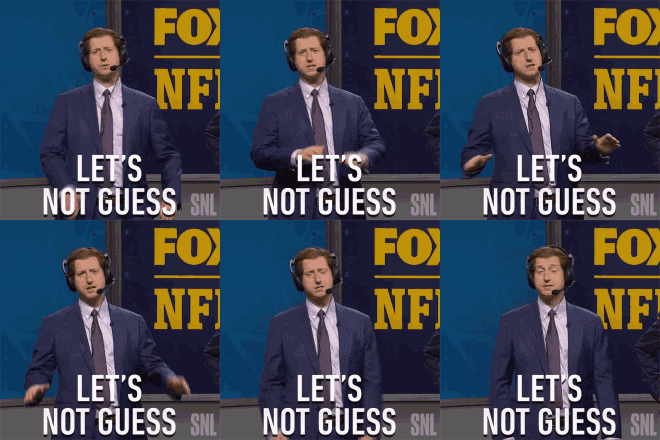
Marketing: “And I need your top FAQs, so we stop guessing what ‘late-stage’ means.” |
→ Translation: Sales is hearing real objections in live conversations. Marketing is seeing patterns in content performance and discovery signals. Both are valuable, but they often live in separate systems and timelines. Q1 works when those signals connect. Marketing builds decision-ready assets that buyers can skim, trust, and share, and sales feeds marketing the real questions buying groups ask when deals stall. |
|
|
Leave the siloed guessing in 2025. Bring shared buyer truth into 2026. |
|
|
|
Bianca has spent the past four years helping businesses strengthen relationships and boost performance through strategic sales and customer engagement initiatives. Drawing on her experience in field sales and territory management, she transforms real-world expertise into actionable insights that drive growth and foster lasting client partnerships. |
|
|
Selling Signals is a TechnologyAdvice business © 2026 TechnologyAdvice, LLC. All rights reserved. TechnologyAdvice, 3343 Perimeter Hill Dr., Suite 215, Nashville, TN 37211, USA. |
|
|
|