When the forecast looks great, and the pipeline doesn’t |
If you’ve ever looked at a dashboard promising a great quarter while your gut says, “No chance,” you’re in good company.
Most sales and finance leaders missed a quarterly forecast in their previous fiscal year, and more than half missed it more than once. Optimism is easy, but accuracy takes work. |
Forecast misses are the norm, not the exception: 4 in 5 sales and finance leaders missed a forecast last year. (Source: Xactly) |
AI forecasting tools are fast and impressive. They crunch activity, patterns, and probabilities, then hand you a number that feels precise enough to trust. The catch is simple: Forecasts don’t close deals. People do. Models are great at history. They’re less aware of what changed last week, which champion went dark, or which deal is stuck in legal limbo. When that context is missing, predictions turn into false hope. And it happens more than teams admit: 71% of RevOps leaders say their forecasts and pipeline details are hidden or incorrect. Today’s issue is about using AI to forecast the right way. Not as a crystal ball, but as an input, paired with deal reality, clean signals, and human judgment. |
|
|
Trust the model. Verify the deals. |
AI forecasting models are great at answering, “Based on past data, what usually happens next?”
However, they fall short in answering the question sales leaders actually need answered: “Is this deal really going to close this quarter?” This gap shows up in the miss itself: Xactly found that more than half of sales leaders’ forecasts are typically off by 10% or more.
If you treat AI forecasts as truth instead of a starting point, you’ll overcommit, underprepare, and scramble late in the quarter. |
Earlier this month, we talked about validating forecasts at the deal level. This week goes one step further with ways to pressure-test the entire forecast logic before you plan headcount, spend, or targets around it. |
-
Run a “deal reality check.” 92% of leaders say regular pipeline data delivery is essential. So, top forecasted deals need to answer: What changed since last week? Who else is involved? What happens if the buyer does nothing?
-
Separate probability from momentum. A deal can look statistically strong and still be stalled. Flag anything without a clear next step on the calendar.
- Downgrade quiet deals aggressively. Silence is a signal. If the champion has gone dark, the forecast should reflect that.
-
Annotate the model. Add notes the algorithm can’t infer: internal blockers, budget freezes, exec reorgs, or deals where the buyer is actively evaluating multiple vendors side-by-side.
- Forecast in ranges, not promises. Use AI to show scenarios. Run best-case, expected, and downside projections based on deal momentum. Then, plan capacity and targets around the expected case instead of the most optimistic one.
|
AI can tell you what usually closes. Sales judgment tells you what is actually closing. The teams that hit their number use both and never confuse one for the other. |
|
|
Forecasting fails when marketing signals are incomplete |
When forecasts miss, marketing often feels blindsided. The pipeline looked strong. Campaigns performed. Leads converted. So what happened? The answer is usually signal quality. |
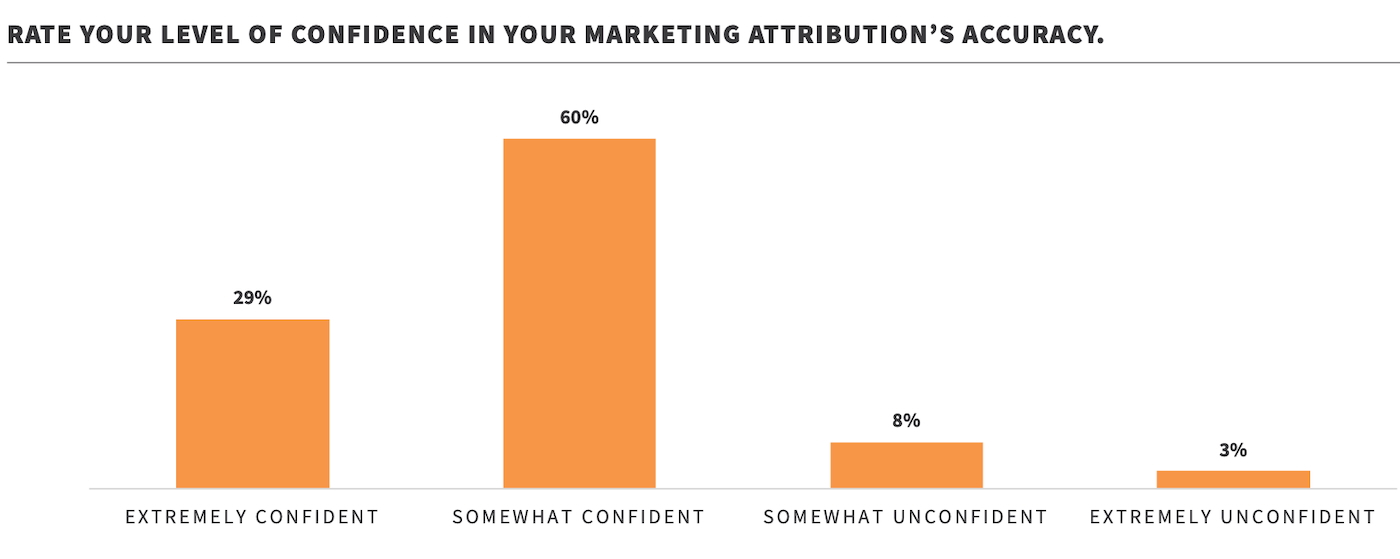
Most marketers aren’t fully confident in their attribution, which means forecasts are often built on partial or uncertain inputs. (Source: Ascend2) |
The barriers aren’t mysterious either: Almost half cite limited resources and complexity, with many also pointing to insufficient data access. That’s exactly why teams need a simpler, agreed-upon signal set for forecasting. Here’s how marketing can tighten the forecasting system and generate better signals: |
- Define which behaviors actually change forecast probability.
Work with sales to identify three to five actions that reliably show buying momentum (for example, pricing page revisits, security reviews requested, implementation questions), and only allow those to increase forecast confidence.
-
Audit campaigns for “pipeline inflation.”
Look at the last two quarters and flag campaigns that consistently create pipeline but rarely close. Down-weight those signals in forecasting models so volume doesn’t masquerade as certainty.
- Close the loop with outcomes, not engagement.
Every closed-won and closed-lost deal should feed back into scoring and forecasting logic. If a signal doesn’t show up in wins, it shouldn’t quietly boost future predictions.
|
When marketing signals are cleaner, forecasts get calmer. Less surprise. Less scrambling. More credibility with leadership. |
|
|
AI says the quarter looks strong.
Sales says half the deals feel shaky.
Marketing says the pipeline is full.
All three can be true at the same time. |
|
|
Forecasting breaks when teams treat AI predictions as promises instead of probabilities. Models surface patterns, while humans surface context. Alignment happens when those two inputs meet before decisions are made.
Translation: AI forecasting should inform the conversation, not end it. The sales team validates the deal's reality. Marketing sharpens the signals that feed the model. Leadership plans from ranges, not wishful numbers. When teams do that, forecasts stop creating false hope and start creating real control. |
|
|
|
Bianca has spent the past four years helping businesses strengthen relationships and boost performance through strategic sales and customer engagement initiatives. Drawing on her experience in field sales and territory management, she transforms real-world expertise into actionable insights that drive growth and foster lasting client partnerships. |
|
|
Selling Signals is a TechnologyAdvice business © 2025 TechnologyAdvice, LLC. All rights reserved. TechnologyAdvice, 3343 Perimeter Hill Dr., Suite 215, Nashville, TN 37211, USA. |
|
|
|