-
News & Trends -
Sales -
Marketing Related Topics -
B2B Software Guides Related Topics -
Free Tools & Resources -
- About Us About Us
Content marketing — or more specifically, the people responsible for its creation — is really going through it. Last year, Marketing Week’s 2025 Career & Salary Survey showed that half (or more) of marketers reported feeling overwhelmed, undervalued, and emotionally exhausted toward their work. 40% reported feeling ineffective.
Even without a survey, it's not hard to guess why.
Layoffs and workforce reductions rocked marketing and sales teams. An AI visibility crisis put many established, high-authority brands below AI overviews, while SEO became AIO became GEO became AEO seemingly overnight.
Meanwhile, sustained performance pressure, tighter budgets, scope creep and expanded roles, and an always-on campaigns left little time to recover.
If there was ever a time for a reset, 2026 might be the year of reinforcing fundamentals, instead of doubling down on high content volumes and flashy tools.
Traditional content marketing advice has created a perfect storm of exhaustion. Marketing agency, LeadingResponse, found that companies relying on single marketing channels struggled throughout 2025, while those using integrated approaches thrived.
Yet most teams are still stuck in the "more content, more platforms, more pressure" cycle.
The problem runs deeper than workload. Social algorithms tend to favor fresh, consistent output. For example, YouTube’s Creator guidance and multiple industry studies show channels with predictable publishing schedules perform better overall.
At the same time, teams are at the mercy of algorithms and code changes that can tank visibility at the drop of a hat.
When things did improve for content marketing teams, 65% of B2B marketers surveyed attributed content relevance and quality — not volume — as their primary success driver, followed by alignment with sales teams.
And it's those concepts that are going to get your team out of its content marketing slump.
Let's go back to planning 101. Instead of making one “all-or-nothing” asset, try scoping three versions of each high-priority idea:
Map each campaign to the ladder, assign a scope to each channel, and determine which triggers (budget, audience intent, or lead stage) escalate the idea to the next rung.
This ladder approach reduces perfectionism and preserves cadence when energy or headcount is low.
Practical next steps: Add a “scope” dropdown to briefs or campaign-related tasks in your content planning system, set SLAs for what “done” looks like at each scope, and build platform-specific templates for each rung.
Stepping back from automation became our most effective strategy in 2025.
As the AI boom pushed teams to create more content faster, what worked best for us was slowing down. AI may have made it easier to create more content, but it also made messages sound the same.
Buyers still engaged, but their trust dipped. We used AI to spot psychology-backed buying signals and then focused our energy on conversations that showed genuine interest.
This year, we’re leaving behind volume-first automation. More messages didn’t mean better pipelines, and we are carrying that lesson forward.
In 2026, our biggest bet is supportive AI. We are building tools that surface timing, context, and readiness from conversations. Supportive AI like this will expand human capacity to focus on judgment, tone, and relationships.
— Kelsey Silver, Founder, Buyer Psychology Specialist at ForesightHQ
Instead of treating content creation as an ad-hoc task, build a lightweight content hub: a repository of raw ideas, headlines, templates, reusable components (CTAs, quote blocks, data visuals), past assets, and distribution playbooks.
Treat it like a product backlog where you can prioritize ideas and split assets into mini/standard/premium scopes. Hubs can eliminate the blank-page problem and speed up production across teams.
Practical next steps: Start with a single Notion/SharePoint page for “idea → brief → micro-template,” exportable to your CMS; create 10 reusable templates in month one; run a weekly 15-minute idea triage meeting to feed the hub.
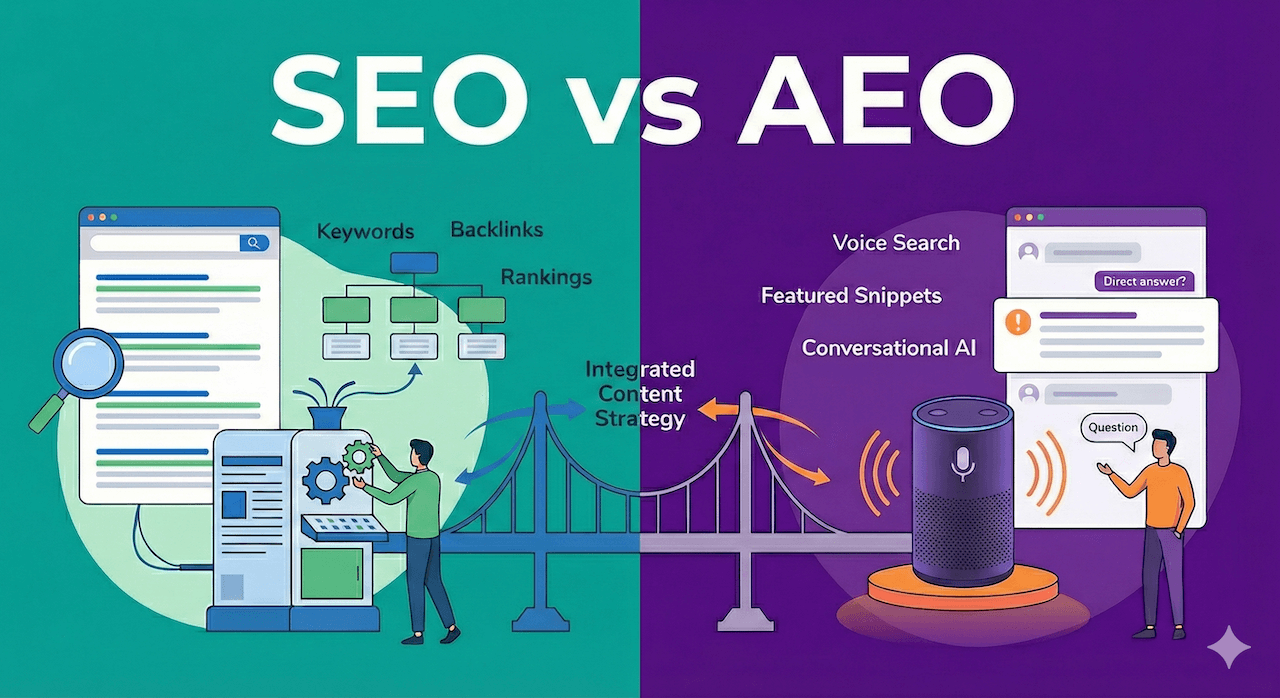
One of the most recent responses we're seeing to search optimization is moving from output-first KPIs to answer-first delivery.
Consider building pages and assets that clearly and directly answer buyer questions with concise summaries, recommended next steps, and data that establishes your authority.
AI-driven answer engines and assistants increasingly surface single “answers” rather than long result lists. So today, fewer, higher-quality, and well-structured assets can outperform high-volume tactics.
Well-structured assets include structured data or schema markups, FAQ blocks, clear H2s and Q&A formatting, and concise summary snippets at the top of pieces.
Practical next steps: Uncover the top 10 high-intent queries your B2B buyers ask, then rewrite those pages to follow an AEO template (one-line answer + evidence + two next-step CTAs), and finish it off with an FAQ schema markup.
My biggest bet for 2026 is AEO. As AI Overviews and tools like Perplexity become the primary research interface for B2B buyers, I'm shifting our focus from 'ranking for clicks' to 'optimizing for citations.'
I'm re-structuring our technical guides into modular, data-dense fragments that are easily digestible for LLMs. The goal is to ensure that when a prospect asks an AI for a vendor recommendation, our clients are the primary sources cited in the generated response.
— Nikolay Krastev, SEO Consultant
Creativity needs unstructured time — your best ideas don't often come from sitting in front of a computer all day. Design your team’s week so people get repeated, protected focus cycles (e.g., 90-minute deep work blocks) and explicit short “reset” breaks.
Block recovery between major sprints (trade shows, quarter launches, etc.) so the team isn’t on a treadmill of back-to-back marathons.
Practical next steps: Set aside two 90-minute maker blocks per week per content contributor, establish “no-meeting” afternoons on sprint days, and challenge other managers to model white-space behavior.
First-party strategies (around signals like site behavior, content interactions, demo downloads, and product usage) let you tailor fewer, higher-value assets to specific accounts and segments.
You might be serving up less content overall, but what you do produce will be far more relevant to accounts and contacts that actually show intent, improve funnel efficiency, and reduce reliance on fragile third-party identifiers.
Practical next steps: Audit what first-party data you already capture, add micro-conversion events for content (e.g., video watch percent as intent), create account-led nurture templates fed by first-party signals, and change KPIs away from “posts published” to “engaged accounts influenced.”
If you're in B2B marketing and tired of initiatives that boil down to playing with prompts or churning out more content, you're not alone.
Even if you're in a place where that mandate prevails, there are steps you can take to reduce feelings of burnout, build stronger fundamentals, and use AI to enhance rather than replace strategic thinking.
None of that means you're cutting corners or trying to do less for the sake of it. At the end of the day, sustainable systems, clear brand voices, and strategic focus can reignite your passion for helpful, creative content solutions. You're trading reactive hustle for intentional systems.
These five strategies build muscle memory for your team, protect your best ideas from being buried, and make sure the right messages reach the right buyers at the right time.

Selling Signals delivers actionable advice for sales and marketing professionals. Learn strategies that help you hit targets, strengthen customer relationships, and win more business. Get expert advice on lead generation, sales processes, CRM software, sales management, and account management directly to your inbox.
Property of TechnologyAdvice. © 2026 TechnologyAdvice. All Rights Reserved
Advertiser Disclosure: Some of the products that appear on this site are from companies from which TechnologyAdvice receives compensation. This compensation may impact how and where products appear on this site including, for example, the order in which they appear. TechnologyAdvice does not include all companies or all types of products available in the marketplace.