


Business-to-business (B2B) buyer persona templates help businesses quickly understand the decision-makers and influencers behind a purchase.
They outline each buyer’s goals, responsibilities, challenges, and decision drivers so sales and marketing teams can personalize their messaging and qualify leads faster. These templates also help identify low-fit prospects early, saving time and improving efficiency.
I’ve created six essential B2B buyer persona templates you can download for free to build accurate, high-impact buyer profiles. Choose the template that best fits your audience, then customize it to reflect the specific roles, challenges, and buying behaviors in your market.
- 1. General buyer persona template
- 2. B2B buyer persona template
- 3. Sales customer persona template
- 4. Decision-maker persona template
- 5. Influencer/evaluator persona template
- 6. Negative (disqualification) persona template
- Example B2B buyer personas
- Components of a buyer persona template
- Tips for creating a buyer persona template
- Frequently asked questions (FAQs)
- Bottom line
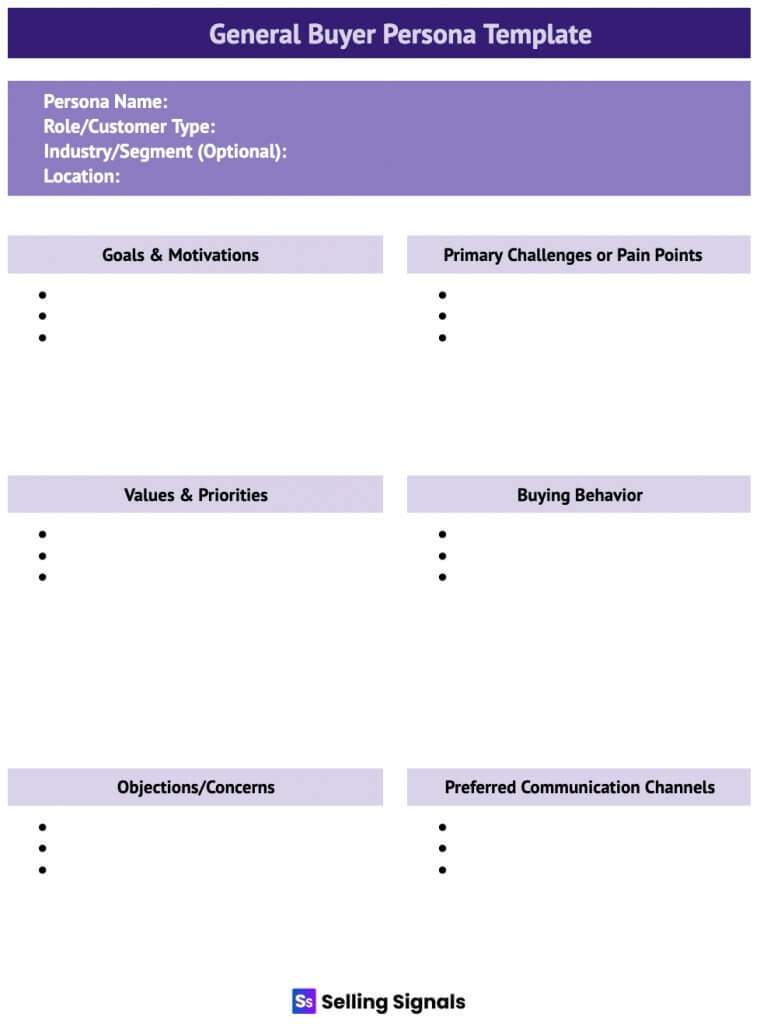
1. General buyer persona template
This is a broad and foundational persona template that applies to almost any buyer type. It covers universal elements such as goals, motivations, challenges, demographics (optional for B2B), and buying behavior. It gives teams a baseline persona before segmenting further.
Who should use it: Businesses that need a versatile, easy-to-use persona format that works across industries or offers.
Why it works: It distills all essential buyer information into a simple, adaptable framework that can evolve as you collect richer customer insights.
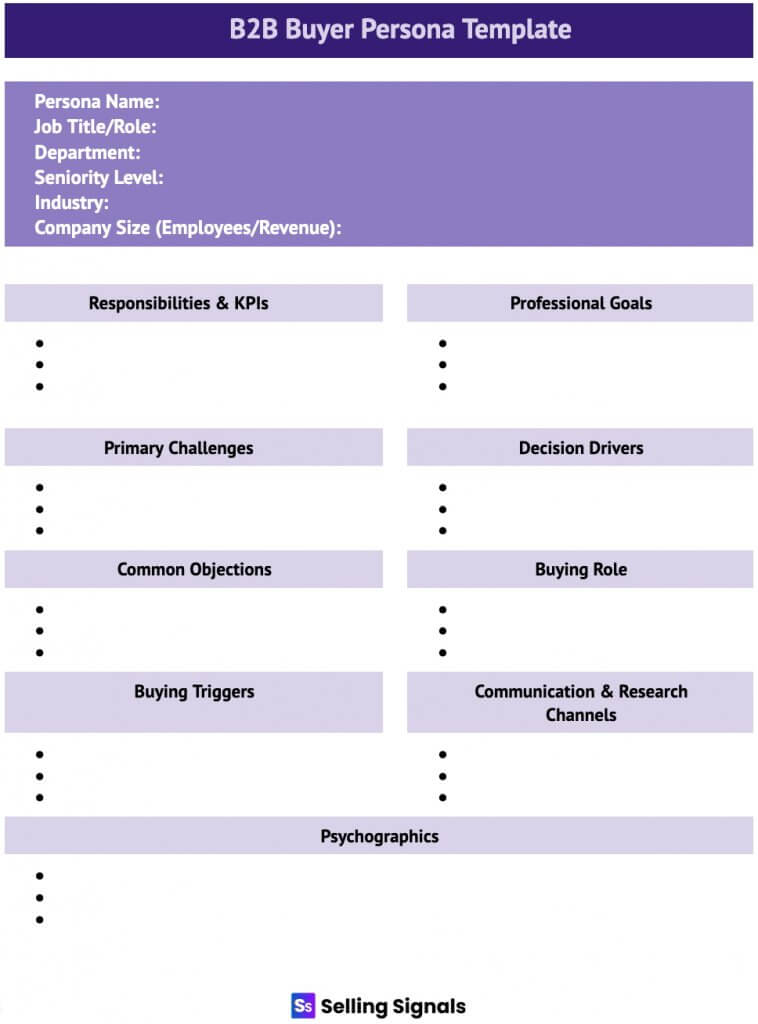
2. B2B buyer persona template
This is a comprehensive persona designed specifically for B2B sales. It includes firmographics, job role, KPIs, challenges, decision criteria, objections, buying triggers, and the buyer’s place in the buying committee.
Developing personas at this level of depth isn’t just best practice; it's also a measurable advantage. In fact, 82% of top-performing B2B marketers say that understanding their audience at a detailed, role-specific level is central to their success.
Who should use it: Sales, marketing, and product teams who need a full understanding of their ideal B2B customer.
Why it works: It captures the business context, internal politics, and role-specific motivations that shape B2B buying decisions.
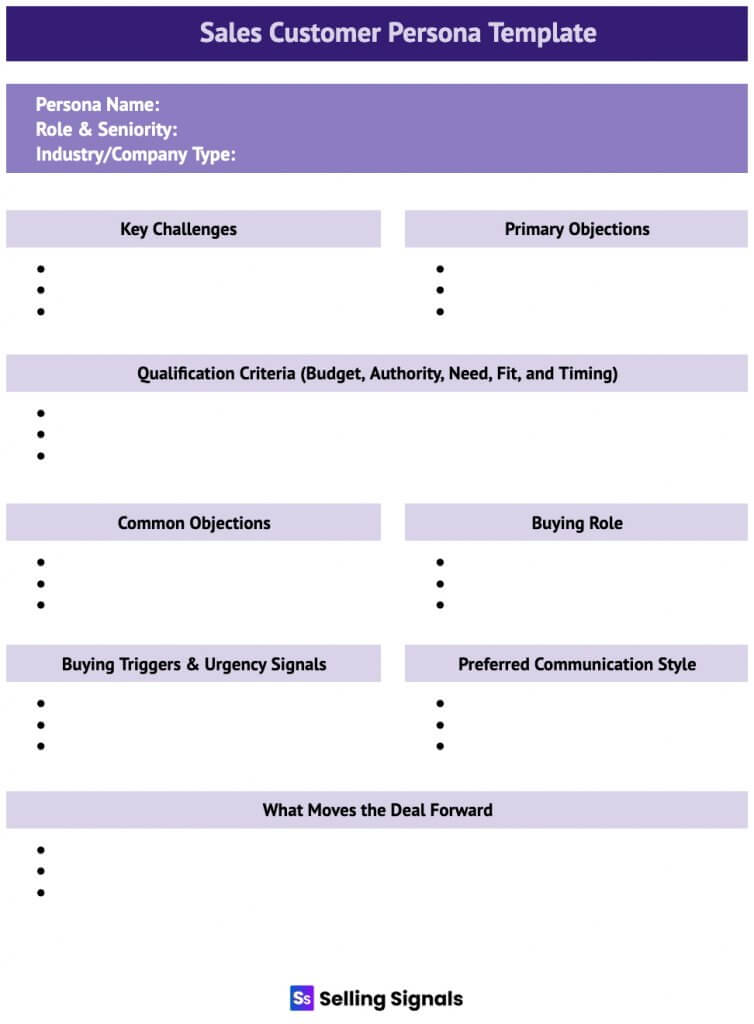
3. Sales customer persona template
This is a sales-focused persona that gives reps the fast, actionable insights needed to run effective discovery calls, qualify leads, and tailor outreach.
Who should use it: Sales reps, Sales Development Representatives (SDRs), and account executives handling outbound, inbound, or discovery.
Why it works: It highlights the persona’s objections, triggers, buying signals, and communication preferences. This helps reps personalize conversations immediately.
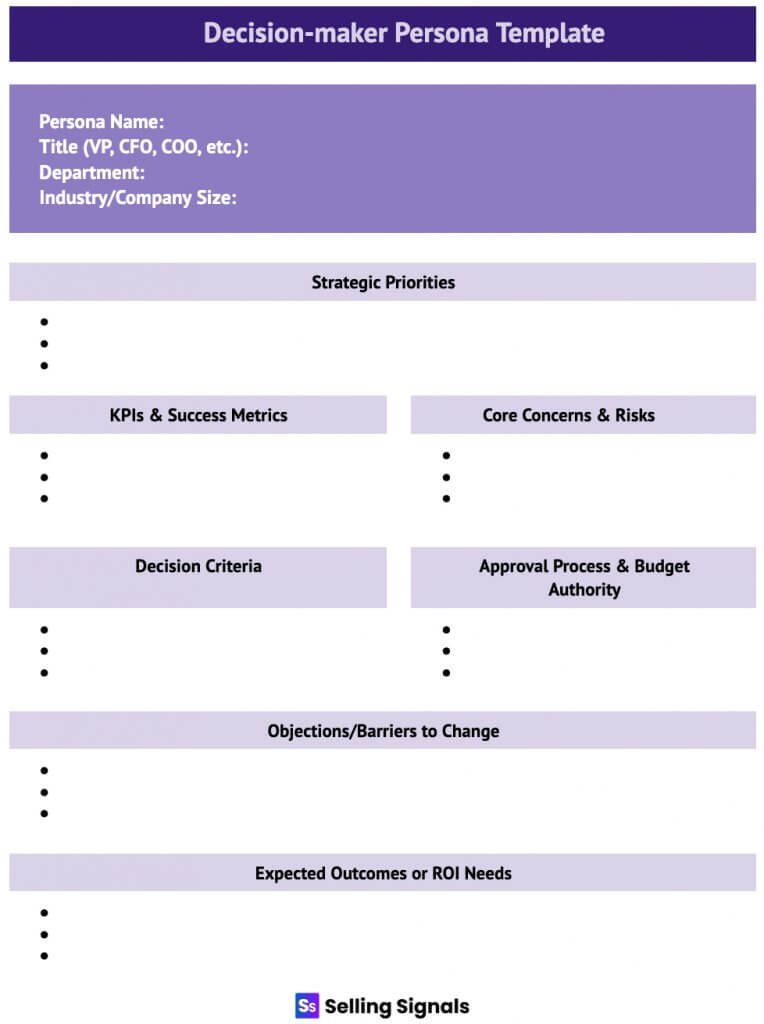
4. Decision-maker persona template
This is a persona built for the executive or leader responsible for approving the budget or finalizing purchases. It emphasizes ROI concerns, strategic priorities, and risk management.
Who should use it: Anyone selling to directors, VPs, C-suite leaders, or budget owners.
Why it works: It focuses on the high-level priorities that actually drive executive decisions, allowing sellers to speak their language.
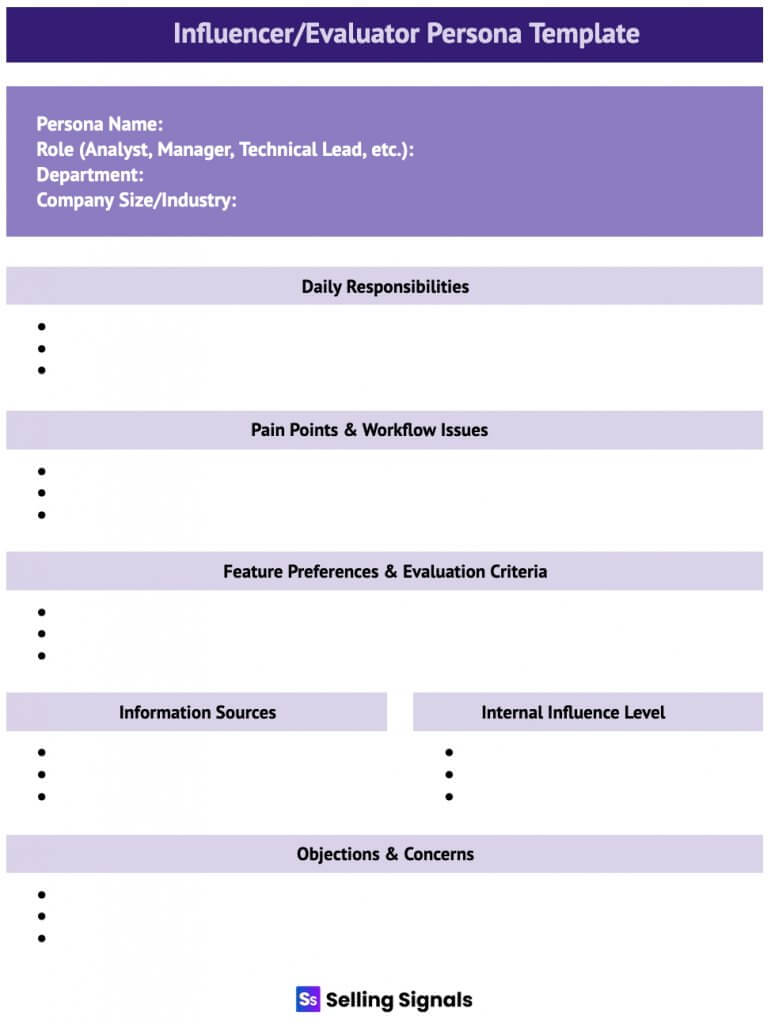
5. Influencer/evaluator persona template
This persona is focused on employees who research solutions, compare vendors, and make recommendations internally. These are often analysts, managers, or technical evaluators.
Who should use it: Marketing teams and sales reps targeting internal champions or technical evaluators.
Why it works: It speaks directly to their day-to-day pain points and research habits, making it easier to win their advocacy.
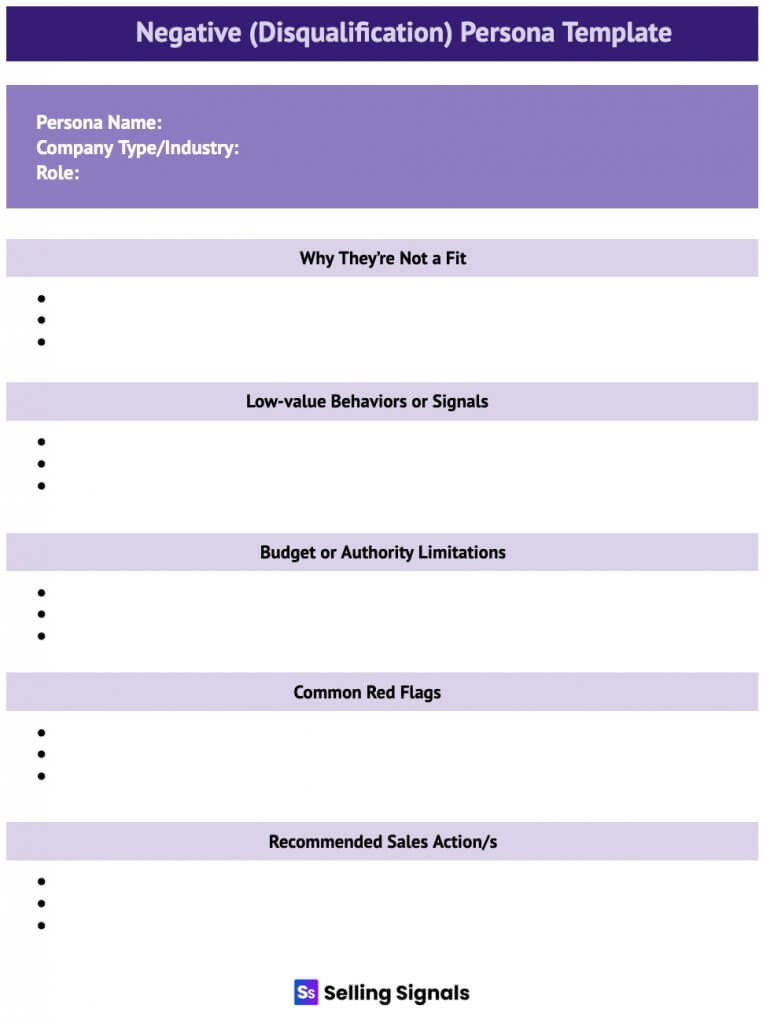
6. Negative (disqualification) persona template
This is a persona that identifies poor-fit leads — those with low budgets, low urgency, wrong industries, or inadequate authority.
Who should use it: Sales, SDR, marketing, and RevOps teams focused on improving efficiency and lead quality.
Why it works: It prevents wasted time by clearly signaling who shouldn’t enter your pipeline or be nurtured heavily.
Example B2B buyer personas
Below are three fully developed example buyer personas that demonstrate how your templates work in practice. These represent the most critical roles in the B2B buying process: the decision-maker, the evaluator, and the end user.
Persona name: Operations Olivia
Title: VP of Operations
Department: Operations
Industry/company size: SaaS, 300–700 employees
Strategic priorities
- Standardize processes across departments
- Reduce operational inefficiencies
- Improve visibility into KPIs and resource allocation
KPIs and success metrics
- Cost reduction
- Operational efficiency gains
- On-time project delivery
- Team productivity metrics
Core concerns and risks
- Workflow disruption during implementation
- Adoption resistance from other departments
- Investing in tools that don’t deliver promised ROI
Decision criteria
- Proven operational impact with measurable ROI
- Integrations with existing systems
- Vendor reputation and customer support quality
Approval process and budget authority
- Reviews proposals from department leaders
- Approves final vendor selection
- Coordinates with finance to allocate the budget
Objections/barriers to change
- “This could slow the team down during rollout.”
- “We’ve tried tools like this before, and they didn’t stick.”
- “Implementation might be more complex than advertised.”
Expected outcomes or ROI needs
- 20%–30% efficiency improvement
- Reduced manual tasks and error rates
- Faster cross-team decision-making
Persona name: IT Director Ian
Role: IT Director
Department: IT
Company size/industry: Fintech, 500–1,200 employees
Daily responsibilities
- Managing IT infrastructure and operations
- Ensuring security and compliance
- Leading technology vendor evaluations
- Supporting cross-team technical needs
Pain points and workflow issues
- Outdated or fragmented tools
- Cybersecurity vulnerabilities
- Department pushback on new tools
- Complex integrations
Feature preferences and evaluation criteria
- Enterprise-grade security
- Scalability
- API and integration flexibility
- Low maintenance requirements
Information sources
- Forrester reports
- Peer recommendations
- Vendor comparison sites
- Industry security webinars
Internal influence level
- Strong influence on tool selection
- Provides technical approval
- Advises the executive team on solution viability
Objections and concerns
- “This tool doesn’t meet our security requirements.”
- “This will create unnecessary tech debt.”
- “Integration could take too long.”
Persona name: HR Manager Helena
Job title/role: HR Manager
Department: Human Resources
Seniority level: Mid-level
Industry: Professional Services
Company size: 100–500 employees
Responsibilities and KPIs
- Oversee hiring, onboarding, and training
- Improve employee engagement
- Reduce time-to-hire
- Compliance and performance tracking
Professional goals
- Streamline HR workflows
- Increase employee retention
- Implement better engagement programs
Primary challenges
- Too many manual HR tasks
- Low employee engagement
- Inefficient onboarding processes
Decision drivers
- Ease of use and quick onboarding
- Strong support and training resources
- Integrations with payroll and ATS systems
Common objections
- “My team won’t adopt another system.”
- “This feels like extra administrative work.”
- “We don’t have time for a long rollout.”
Buying role
- Evaluator and user champion
- Recommends final tools to the COO/CFO
Buying triggers
- High turnover rates
- Recent hiring surges
- Employee feedback on outdated processes
Communication and research channels
- LinkedIn HR communities
- SHRM articles
- HR tech webinars and case studies
Psychographics
- Values efficiency and team morale
- Risk-averse but open to proven tools
- Prefers clear, simple implementation plans
These examples illustrate how each template translates into a clear, actionable buyer profile that your sales and marketing teams can immediately use. As you build your own personas, tailor each one to reflect the roles, challenges, motivations, and decision dynamics unique to your market.
The more specific and data-driven your personas are, the more effectively they’ll guide your messaging, qualification, and outreach.
Components of a buyer persona template
Buyer persona templates typically include several core components that paint a clear picture of your ideal customer. These sections, which are found in our free general template, help you understand not just who your buyer is, but also why they buy.
Most personas distill each component into a handful of bullet points, though some teams prefer table-based or narrative formats. Below is a breakdown of each component and the strategic insight it provides.
Personas are more memorable and useful when they feel human. Assign a name that reflects a defining trait (e.g., “Technology Tristan,” “Operations Olivia”) and add a simple stock image or illustration. This helps sales and marketing teams visualize the persona as a real person, not a data set.
Demographic details (such as age, location, job title, income, and career stage) provide foundational context about the individual behind the purchase.
Unlike a broader customer profile, which covers ranges and segments, a buyer persona focuses on one specific fictional person. If you want to build this foundation first, learn how to create a customer profile before developing your personas.
Lifestyle details like hobbies, personal interests, and professional learning goals add helpful color to the persona. These insights can support warmer sales conversations and inspire more relevant content, especially in relationship-driven sales cycles where rapport matters.
This section captures what drives the buyer both professionally and personally. Motivations explain their deeper aspirations, while goals outline what they’re actively trying to achieve. Knowing both allows you to craft messaging that resonates with their priorities and positions your offering as the clearest path to success.
Challenges highlight what’s getting in the buyer’s way, whether it’s operational inefficiency, knowledge gaps, resource constraints, or personal frustrations. Understanding these pains enables your team to align your solution with the buyer’s urgent problems, making your pitch feel relevant and timely.
Fears reveal the risks or negative outcomes your buyer wants to avoid. These could include missing targets, choosing the wrong vendor, wasting budget, harming their reputation, or stalling their career. Addressing these anxieties in your messaging helps reduce friction and builds trust during the buying process.
This section clarifies where and how your persona prefers to consume information, which could be via email, LinkedIn, referrals, or webinars. Aligning your outreach with these channels increases engagement, improves conversion rates, and ensures your message reaches the buyer at the right moment.
Understanding how your buyers prefer to communicate makes your outreach more relevant. This matters since 56% of consumers say they’re more likely to become repeat buyers after a personalized experience
Tips for creating a buyer persona template
If you create your own buyer persona template from scratch, there are some best practices to follow to ensure you create a template that’s easy to fill out and effective once complete.
These tips are to add specialized sections, update the template regularly, craft more than one buyer persona, and reference your customer profile during the creation process.
- Add industry-specific sections: Instead of just sticking to the common components like goals and lifestyle, add sections that help your specific business make its decisions. A financial advisor might add a financial situation section to better qualify leads.
- Consistently update your template: As you uncover more information about your target buyer, make the appropriate changes to your buyer persona.
- Create multiple buyer persona templates: It’s a good idea to create different templates for different purposes. Consider making a short version for easy pre-call reference and a comprehensive version for more strategic planning.
- Use your customer profile as source material: Make sure your buyer persona reflects the hard data collected in your customer profile. False assumptions might lead to bad marketing decisions. Use one of our customer profile templates to create one.
If you follow the above steps, you should have one or multiple templates that help your marketing, sales, and product teams understand their target buyer. It will also help you perform more productive lead generation activities like outreach and qualification.
Frequently asked questions (FAQs)
An Ideal Customer Profile (ICP) describes the ideal company, while a buyer persona describes the individual people within that company who influence or make the purchase.
Most businesses need two to five personas. This could include a primary buyer, a decision-maker, one or two influencers/evaluators, and a negative persona to filter out bad-fit leads.
Use interviews, CRM data, customer surveys, win/loss analysis, support tickets, sales feedback, and insights from your marketing analytics.
Most teams should review them every six to 12 months or whenever there is a major shift in the market, customer behavior, or product offering.
Yes. Marketing uses personas to craft targeted content and campaigns, while sales uses them to personalize outreach, qualify leads, and handle objections.
Bottom line
Buyer personas help businesses understand their audience and make smarter, customer-centered decisions. Using ready-made buyer persona templates makes the process faster and easier, since they include the key sections needed to define a buyer’s motivations, challenges, fears, and goals.
Download our templates, customize them to fit your market, and use them as a foundation for more targeted sales and marketing efforts.
