-
News & Trends -
Sales -
Marketing Related Topics -
B2B Software Guides Related Topics -
Free Tools & Resources -
- About Us About Us
A strong sales comp plan shapes how your team sells, not just how they get paid. The right incentives reinforce the behaviors that drive revenue, while a poorly designed compensation sales plan can lead to misaligned priorities, unrealistic quotas, and inconsistent performance.
In this guide, I’ll explain what a sales comp plan is, what it should include, and the most common compensation structures companies use today. I’ll also walk you through a step-by-step guide to building your own plan and reviewing sales compensation plan examples to see how different models work in practice.
To provide a faster starting point, I've prepared a sales compensation plan template in Excel that you can download for free. Use this to track quotas, commission rates, and payouts as you build your plan.
Quick answer: What is a sales comp plan?
A sales comp plan (sales compensation plan) defines how sales representatives earn pay based on performance. It typically includes base salary, commission rates, quotas, bonuses, and payout rules designed to motivate reps and align selling behavior with company revenue goals.
An effective compensation sales plan combines several components that determine how sales reps are paid and what performance they’re rewarded for. While structures vary by industry and company size, most plans include the following core elements.
Together, these elements form the structure of a sales comp plan, aligning rep incentives with company revenue goals.
Sales organizations use several common compensation structures depending on their revenue model, sales cycle, and growth goals. Below are some of the most widely used types of compensation sales plans.
| Sales compensation structure | Best for | Pros | Cons |
| Salary + commission | Most B2B/SaaS teams | Stable pay + performance incentive | Requires careful quota setting |
| Commission-only | Startups, independent reps | High upside; strong motivation | Income instability |
| Tiered commission | Growth-focused teams | Rewards exceeding quota | More complex payouts |
| Profit-based commission | Margin-sensitive businesses | Protects deal profitability | Needs margin tracking |
| Bonus-based plan | Strategic initiatives | Drives short-term goals | Less consistent incentive |
Many organizations combine these structures into hybrid compensation plans, such as salary plus commission with accelerators or bonuses for strategic deals.
This is the most common structure in B2B sales. Reps earn a base salary plus commission on the revenue they generate. The base provides income stability, while commission rewards performance. Many companies also offer accelerators once reps exceed their quotas.
In a commission-only model, reps earn their entire income from sales they close. This structure is sometimes used in startups, independent sales roles, or highly entrepreneurial environments. While it offers high earning potential, it also creates greater income variability.
Tiered plans increase commission rates as reps reach higher levels of quota attainment. For example, a rep may earn 8% commission up to quota and 12% on revenue beyond quota. This structure encourages overperformance and rewards top sellers.
Instead of paying commission based on revenue, some organizations calculate commission using deal profit or margin. This approach encourages reps to protect pricing and focus on profitable deals rather than discounting to close sales.
In this structure, bonuses supplement base salary and commissions. Bonuses may reward quarterly revenue targets, strategic account wins, or the promotion of new products. These incentives help align compensation with specific business priorities.
Review historical sales data — such as average deal size, win rates, and quota attainment — before choosing a compensation structure. These metrics help determine whether your plan should prioritize stability, growth, or margin.
CRM reporting tools like HubSpot CRM can help analyze pipeline and performance data to support more informed sales comp plan decisions.
Creating a strong sales comp plan requires balancing rep motivation with predictable revenue. The steps below outline a practical process and include examples that sales leaders can follow when designing a plan.
Start by identifying the outcomes your organization wants to drive, such as new customer acquisition, expansion revenue, or higher deal values. Compensation should reward the behaviors that support those goals — for instance, a company focused on growth may offer higher commission on new customer deals than on renewals.
Different sales roles contribute to revenue in different ways, so their compensation should reflect those responsibilities. An SDR, for example, might earn bonuses for qualified meetings booked, while an account executive earns commission based on closed deals and revenue generated.
Determine what reps should earn when they hit quota and how that compensation is split between base salary and variable pay. For instance, an account executive with $120,000 OTE might have a 60/40 pay mix, with $72,000 in base salary and $48,000 tied to performance-based commissions.
Define the revenue targets reps must achieve and the commission percentage they earn for meeting or exceeding those targets. A rep with a $500,000 annual quota might earn 10% commission on closed revenue, with higher commission rates once they surpass quota. CRM reporting tools like HubSpot CRM, Pipedrive, and Zoho CRM can help analyze pipeline data, win rates, and deal size trends when setting realistic quotas.
Additional incentives encourage reps to exceed targets or prioritize key initiatives. Many companies introduce commission accelerators once reps exceed quota or offer bonuses for closing large strategic deals, such as a higher commission rate on enterprise accounts.
Before launching a plan, forecast commission payouts at different performance levels to ensure the structure remains financially sustainable. For example, if a large portion of the team exceeds quota in a strong quarter, leadership should confirm the business can support the resulting commission payouts. Sales leaders often use pipeline analytics and performance reporting from tools like HubSpot CRM, Zoho CRM, or monday CRM to model revenue scenarios.
Once finalized, clearly outline how compensation will be paid, including payout timing, commission rules, and eligibility requirements. A plan may specify that commissions are paid monthly after revenue is recognized, and that deals involving multiple reps will split commissions based on predefined rules. Regular reviews help ensure the sales comp plan continues to align with evolving business goals.
A strong sales comp plan should motivate reps while remaining clear, fair, and sustainable. The following best practices highlight common mistakes companies make — and how to avoid them.
CRM and reporting tools help sales leaders track the data behind a strong sales comp plan — including pipeline health, quota progress, revenue trends, and rep performance. While these platforms don’t manage compensation directly, they provide the insights needed to set quotas, evaluate attainment, and adjust incentive structures.
HubSpot CRM provides pipeline tracking, customizable sales reports, and revenue forecasting. Teams can use these insights to compare quota targets against deal velocity, conversion rates, and rep performance.
Starting price: Free (two users) or $9/user/month (billed annually)
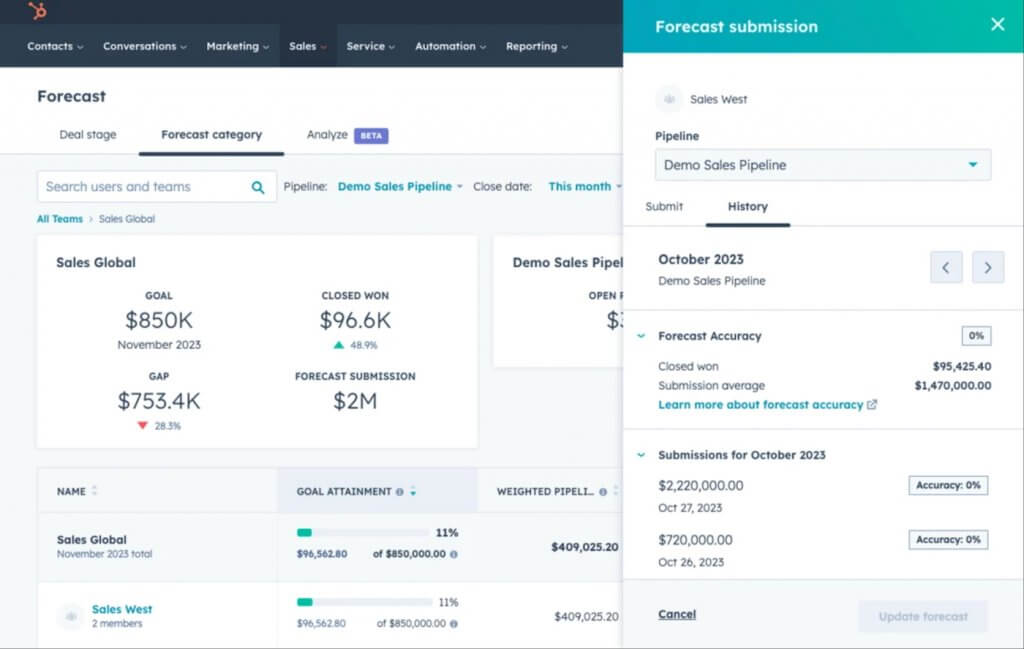
Read our expert HubSpot CRM review to see how its reporting and forecasting tools can support quota planning.
Pipedrive focuses on deal tracking and pipeline visibility. Its dashboards help managers monitor open opportunities, revenue progress, and sales activity across the funnel.
Starting price: $14/user/month (billed annually)
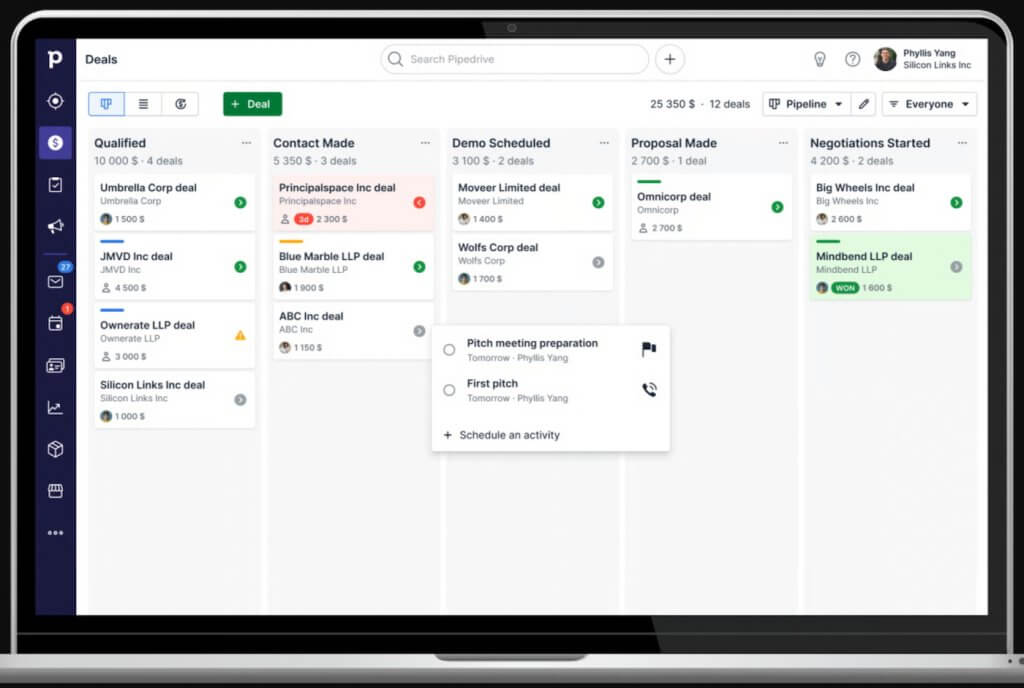
Explore our Pipedrive review for a closer look at its pipeline and deal-tracking features.
Zoho CRM offers customizable dashboards, forecasting tools, and target tracking across teams or territories. These features can help leaders analyze attainment trends and spot gaps between quota and performance.Starting price: Free (three users) or $14/user/month (billed annually)
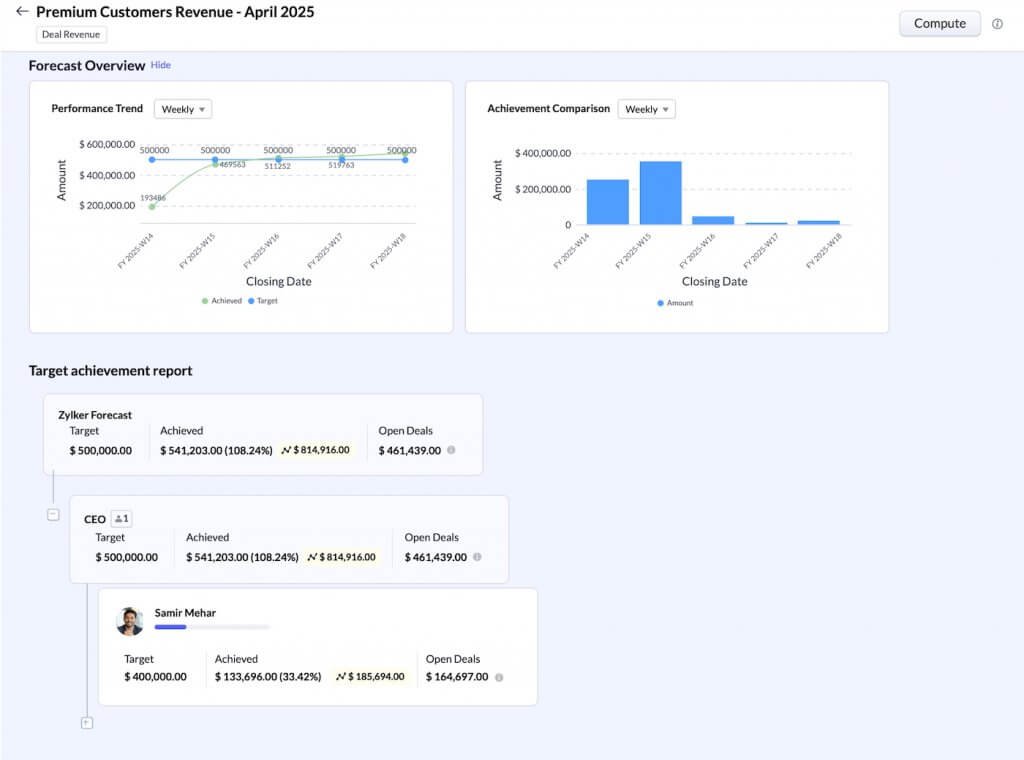
See our Zoho CRM review to learn how its dashboards and forecasting features support sales planning.
monday CRM provides visual pipeline management and flexible dashboards for tracking deals, team activity, and revenue forecasts. This visibility can help teams compare pipeline performance with compensation targets.
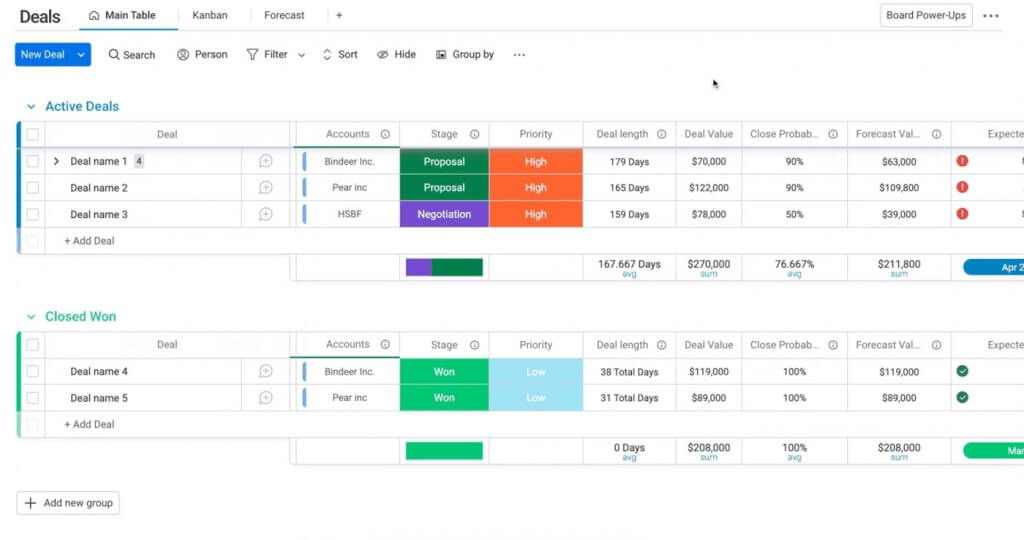
Starting price: $12/user/month (billed annually), minimum of three users
Designing sales compensation plans typically follows seven moves: align incentives to business goals, define roles and metrics, set OTE and pay mix, choose quotas and commission rates, add bonuses or accelerators, model payout scenarios for cost and behavior, then document and review the plan regularly.
Common sales compensation plan examples include base salary plus commission (most teams), tiered or ramped commission rates (to reward overperformance), commission-only plans (rare, high-variability), profit/margin-based commissions (to protect profitability), and bonus-based plans tied to key milestones.
A typical sales commission structure pairs a base salary with a percentage of revenue earned on closed deals. Many plans also include quota-based accelerators after 100% attainment, plus clear rules for deal credit, splits, and payout timing.
A strong sales compensation plan should include role definitions, OTE and pay mix, quotas, commission rates, bonus or accelerator rules, payout timing, eligibility requirements, and policies for returns/cancellations, splits, and territory or account ownership.
You can start with a sales compensation plan template in Excel or a sales rep compensation plan template that tracks rep details, quota, commission rate, revenue, bonuses, and total payout. Many teams use this format to standardize calculations before automating with reporting tools.
A strong sales comp plan aligns incentives with business goals and gives reps a clear path to higher earnings. Define roles, set realistic quotas, and choose a commission structure that supports your revenue strategy.
Review pipeline and quota data regularly — often through CRM reporting — to ensure targets remain achievable and incentives drive the right behaviors. As your sales strategy evolves, update the plan to keep compensation aligned with performance goals.

Selling Signals delivers actionable advice for sales and marketing professionals. Learn strategies that help you hit targets, strengthen customer relationships, and win more business. Get expert advice on lead generation, sales processes, CRM software, sales management, and account management directly to your inbox.
Property of TechnologyAdvice. © 2026 TechnologyAdvice. All Rights Reserved
Advertiser Disclosure: Some of the products that appear on this site are from companies from which TechnologyAdvice receives compensation. This compensation may impact how and where products appear on this site including, for example, the order in which they appear. TechnologyAdvice does not include all companies or all types of products available in the marketplace.