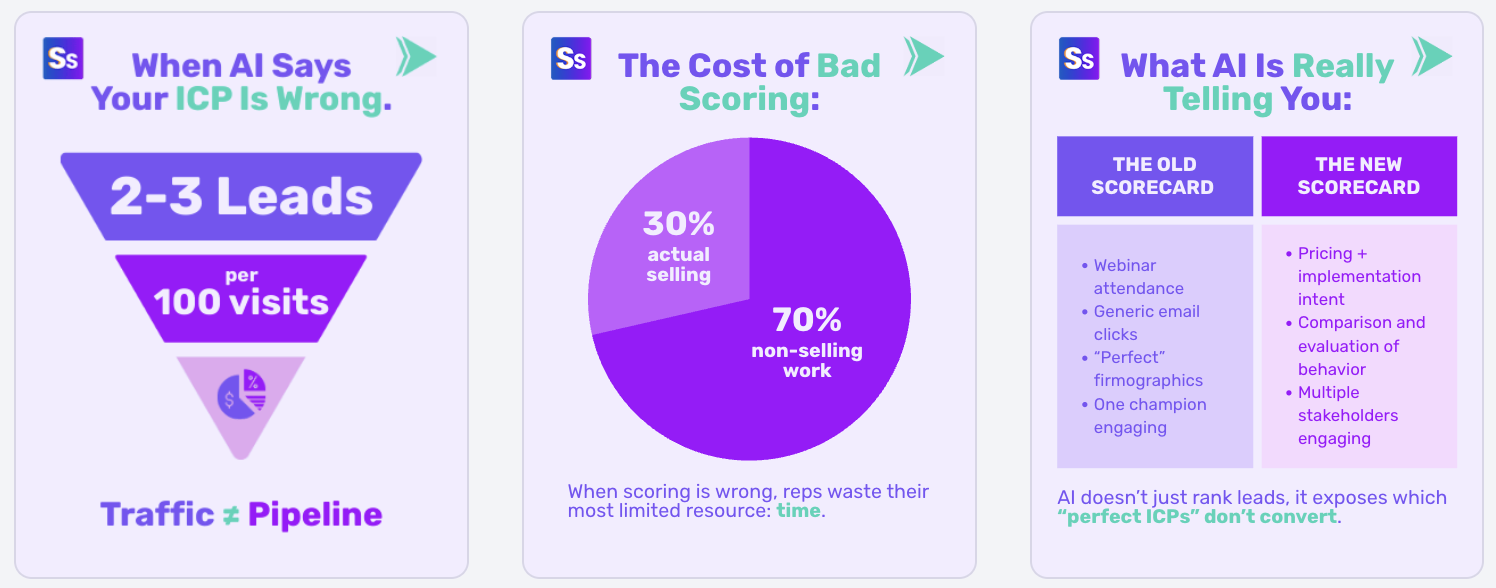
Your Forecast Is Built on Seller Confidence, Not Buyer Evidence |
Tomorrow is World Metrology Day — the global celebration of measurement science. This makes this an appropriate time to discuss one of the least scientific exercises in B2B: Pipeline forecasting.
You’ve heard the updates before. |
“They seemed really interested.”
“The demo went great.”
“The champion loves us.”
“I feel good about this one.” |
Helpful? Maybe. But are they measurable? Not exactly. |
The problem here is when seller confidence quietly replaces buyer evidence. Confidence is easy to generate in pipeline reviews, but actual buying movement is harder to prove.
As Dale Shephard, Founder and CRO at TrinityHawk, put it, reps often hear positive feedback and assume the deal is progressing “when they haven’t identified the key buying personas involved in the decision.” |
🩺Diagnosis: Forecasting breaks when confidence becomes a measurement category. |
|
|
|
Pipedrive is an easy-to-use sales CRM tool that empowers teams of all sizes to close more deals.
👉 Visit Pipedrive |
|
|
|
Marketing quietly contributes to forecasting problems, too, because engagement metrics are often treated as buying evidence. |
Example:
A target account downloads multiple assets, attends a webinar, revisits the pricing page, and opens several nurture emails.
Marketing sees engagement. Sales sees an opportunity. And leadership sees forecast upside. But none of those actions automatically means the buyer is moving toward a decision. Sometimes it means one curious evaluator is researching. Sometimes it means a competitor comparison is happening. Sometimes it means someone downloaded a report while avoiding another meeting that should’ve been an email. |
Engagement matters. But without progression, it gets misread as momentum surprisingly fast. Dale Shephard sees the same issue in pipeline reviews: |
“These are not the next three planned activities. These are the next three things that will fundamentally move the deal forward and show progress.” |
That distinction matters more than most teams realize. Activity is easy to measure, but buyer advancement is harder. The strongest GTM teams separate activity from advancement. They look for signals like buying-group expansion, increased urgency, internal alignment, and buyer-side effort. Real pipeline progression creates friction inside the buyer organization — not just activity inside your dashboard. |
Separate engagement metrics from progression metrics. Content consumption is a useful context, but it is not proof of buying movement. |
|
|
|
Submissions have been edited for length & clarity |
|
|
|
| What buyer-side evidence should outweigh rep confidence in a forecast? “One of the biggest forecasting gaps is a poor stakeholder map. Reps hear positive feedback and assume the deal is progressing, but they haven’t identified the key buying personas involved in the decision. That’s usually what creates last-minute obstacles late in the cycle.
Another issue is when critical deal activities haven’t started, and the rep has no clear timeline for them. Procurement, commercial negotiations, infosec reviews, legal approvals — these often get treated like late-stage admin work when they’re actually core buying signals.” Where do pipeline reviews most often confuse activity with actual deal progress?
“On pipeline reviews, I like to focus on what I call the ‘next three steps.’ Sounds basic, but these aren’t just the next three activities on a checklist. They’re the next three actions that will materially move the deal forward and prove progress.
A strong rep should know who needs to be involved on both sides, when those conversations are likely to happen, and what dependencies could slow things down. That’s real deal progression, not just activity.” Dale Shephard, Founder and CRO at TrinityHawk |
|
|
|
Sales teams feel the forecasting gap more directly because they’re the ones defending the number. Forecast accuracy rarely collapses all at once. Instead, it erodes slowly. |
One “commit” deal stays open despite no next meeting. One silent champion still counts as momentum. One stalled evaluation somehow remains “active.” Eventually, the forecast becomes more about how convincingly the rep can narrate belief.
Example:
A rep says a deal is highly likely to close this quarter. The buyer attended demos, the conversations were positive, and the proposal was well-received. But procurement hasn’t been involved, no executive stakeholder has engaged, legal hasn’t entered the conversation, and the next meeting still isn’t scheduled.
The only strong signal is seller confidence. That’s not deal progression; it’s optimism wearing a Salesforce badge. As Eshaan Jain, Senior Manager of Product at Mphasis, put it: “The deal dies in legal or finance approvals.”
A deal isn’t truly moving just because the conversation feels good. It moves when the buyer starts doing the hard internal work: bringing in finance, reviewing security, confirming rollout timelines, or aligning stakeholders who can actually block the deal. Serious buyers leave evidence behind, not just warm feedback and polite enthusiasm. |
Dale Shephard’s framework for this is simple: the “next three steps.” Not the next three planned activities, but the next three actions that materially move the deal forward and prove progress. |
Build forecast reviews around observable buyer behavior, not seller interpretation. Every stage progression should require evidence that the buyer has materially advanced the decision. |
|
|
|
Forecast calls sound confident. Pipeline coverage looks healthy. Engagement metrics are active, and deals appear “close.” However, the number slips quarter after quarter. |
“The most useful sales interactions usually leave you feeling that the problem has been clarified.” |
Why? Because many forecasts are built on sellers' interpretations layered atop buyers' ambiguity. The buyer was “interested.”
The champion was “positive.”
The meeting “went well.” Maybe all true, but none of those are measurable buying signals. And when forecast reviews reward confidence over evidence, reps naturally learn to narrate optimism rather than diagnose risk. That’s how the pipeline slowly turns into fiction with timestamps. The best revenue teams don’t just ask: “How does the rep feel about the deal?” They ask: “What has the buyer actually done that proves movement?”
That’s the difference between forecasting and wishcasting. |
|
|
|
Enjoyed this issue?
We break down how buyers actually move and what top teams do differently. If you’re rethinking your funnel or pipeline, catch up with our past issues. |
|
|
|
More ways to connect with Selling Signals! |
Get the latest in sales and marketing without opening your email. Follow us on LinkedIn or Facebook for swipeable frameworks, bite-sized visual breakdowns, and a chance to join the conversation. |
|
|
|
|
Bianca has spent the past four years helping businesses strengthen relationships and boost performance through strategic sales and customer engagement initiatives. Drawing on her experience in field sales and territory management, she transforms real-world expertise into actionable insights that drive growth and foster lasting client partnerships. |
|
| |
Selling Signals is a TechnologyAdvice business © 2026 TechnologyAdvice, LLC. All rights reserved.
TechnologyAdvice, 3343 Perimeter Hill Dr., Suite 215, Nashville, TN 37211, USA. |
|
|
|
|