








A needs assessment is a qualification tool sales and marketers use to analyze a lead’s needs and see if they’re a good fit for a product or service. It can be done digitally through a web form or online questionnaire, or live as part of a discovery call. The goal is to initially qualify leads so you can discard bad-fit ones and spend time further qualifying leads you can likely help. Needs assessments ultimately allow you to quickly and accurately nurture the prospects that are most likely to close.
How a Needs Assessment Works
Businesses can choose to qualify leads via online or live needs assessments. Online assessments are typically web forms or questionnaires conducted by marketing or sales. Live assessments are usually part of a larger discovery call where a salesperson verifies need plus budget, authority, timeline, or other factors. Regardless of the assessment type, the business asks the same questions about goals, pain points, and support needed so they can easily compare leads' needs.
The three types of needs assessment are as follows:
- Web Form: This needs assessment qualifies a website visitor as a marketing qualified lead. These are the online “contact us” forms and quizzes that live on a business’s website (usually a home page or services/product page). Read more below.
- Online Questionnaire: This is the Google Forms or other quiz a sales rep sends directly to a lead over email to further qualify them as a sales accepted lead. This form asks more in-depth questions about their needs. Read more below.
- Live Needs Assessment: A sales rep holds a discovery call with a lead and attempts to qualify them as a sales qualified lead by asking questions about their needs and other key factors. If the lead passes, the rep begins nurturing them as a prospect. Read more below.
For inbound leads, you might go through all three stages of the needs assessment framework. The lead may fill out a “contact us” form after visiting a website, then a sales rep might send the lead a more detailed questionnaire, scheduling a discovery call with an experienced seller if they meet a certain threshold. For outbound leads generated via sales prospecting, you may only use a questionnaire and discovery call, or have the call itself serve as the sole needs assessment activity.

You can even use an online questionnaire or a live call to assess your current customers' needs and use their answers to gauge how well you're serving them or to decide which products or services to create in the future. However, most needs assessments for sales refer to learning about your leads' business needs to decide whether you can help them before letting them into your pipeline in the first place.
Now that you have the big picture of the purpose of a needs assessment and each type of assessment, let’s go over the first type: the online web form.
How to Create a Needs Assessment Web Form
Your web form will exist as a “contact us” form, quiz, or other lead capture form on your website’s home page, services page, contact page, or landing page. It’s often the first place a lead will reach out to you directly for your product or services. These forms are meant to qualify visitors as marketing qualified leads (MQLs).
To create this web form, follow these steps:
- Choose Your Questions: Have your lead fill out a few simple questions, including their contact information so you can follow up with them.
- Add the Form to Your Website: Follow your website platform's instructions to add the form to the page you'd like, and test it to ensure it works.
- Evaluate the Lead's Answers and Reach Out: Have the marketing or sales team read through exactly what the lead wants, then follow up by sending an online questionnaire or planning a discovery call.
We'll explain each in more detail below:
1. Choose Your Questions
As you create your form, ask for leads' contact information plus 1–3 basic needs assessment questions; too many questions might scare them off. A web form may ask for contact information such as the lead's name, company name, phone number, email address, and job title. It could also ask for the goal they need help reaching, their key objectives, the main problem they want to solve, and the extent of support they want from you — you can offer dropdowns, as shown below:
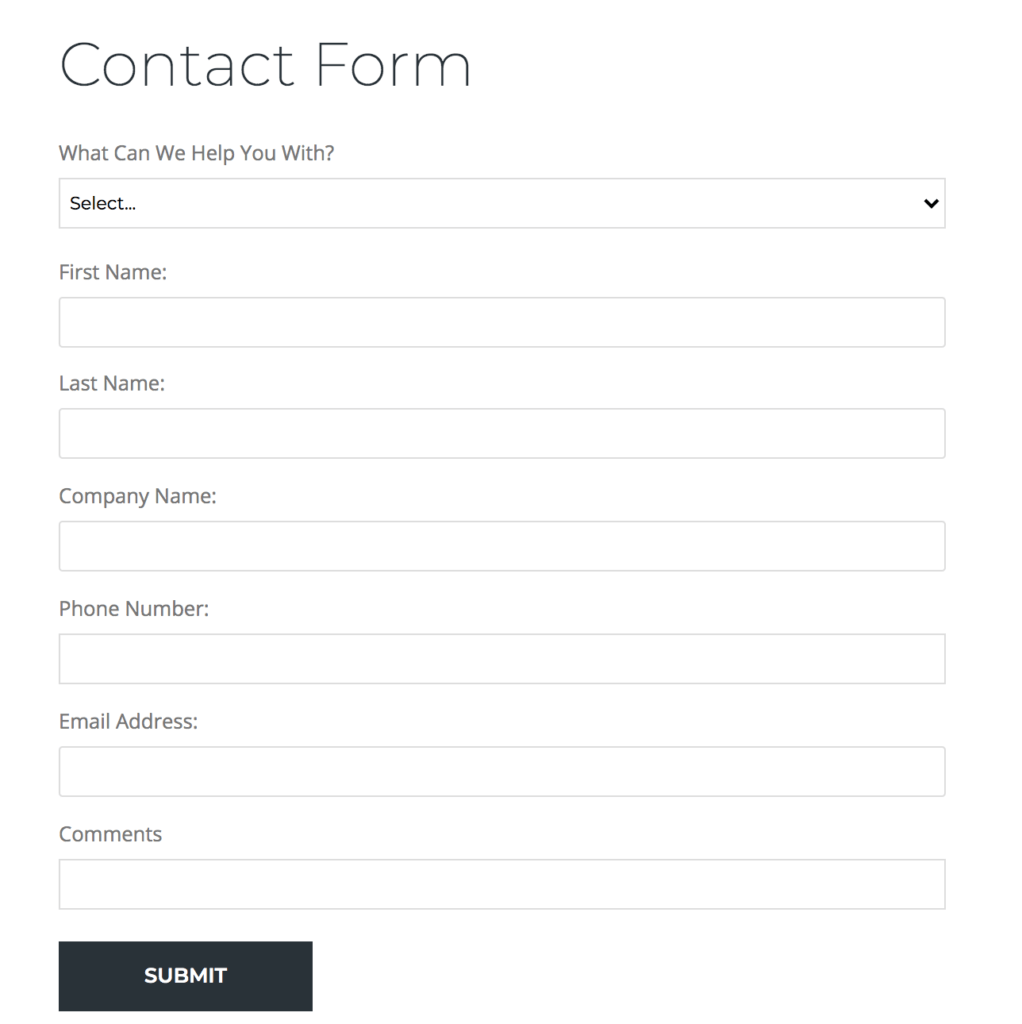
Example web form needs assessment
Some companies include a slightly higher number (5–6) of needs assessment questions on the form to further qualify leads. These can be questions like “Which software are you currently using for {task}?” This provides more data to assess fit and allows leads to potentially skip over the second stage (the questionnaire) and go straight to a discovery call. Test this out if you’re spending too much time qualifying leads.
2. Add the Form to Your Website
The process to set up a form depends on your website platform (e.g., WordPress). Your service likely offers a template form and directions on how to customize it. Enter the questions to include on the form, and select where it lives on the website — generally, this should be the page with the most traffic. For the concrete steps, read this article on how to put a form on your site.
3. Evaluate the Lead's Answers & Reach Out
After a lead submits a form, marketing assesses their level of qualification using a lead scoring point system. Or, a sales rep evaluates the answers on their own by making sure the specified need is something their business can satisfy, referencing their ideal customer profile (ICP). The rep might also manually research the lead to see how well their attributes, like job title or responsibilities, match their ICP.
If all checks out according to the web form, the lead moves on to the next needs assessment type: an online questionnaire or discovery call. Let's look at the questionnaire first.
How to Create & Send an Online Questionnaire
The goal of sending an online questionnaire is to learn more about whether a lead is qualified enough for a more in-depth discovery phone call. You’re asking them questions and evaluating their answers to see if the lead should be a sales accepted lead (SAL). The questionnaire should include questions that help you uncover their needs.
Google Forms is one of the best tools to use to build this online questionnaire. To conduct a needs assessment with Google Forms, follow these steps:
- Decide Which Questions to Ask: Pick questions that give you insight into the lead’s level of qualification.
- Create Your Questionnaire: Follow Google Forms’ instructions to build your questionnaire using the questions you’ve chosen.
- Send the Questionnaire to the Lead: Email the questionnaire to the lead and tell them why you’re sending it.
- Update the Lead’s Status and Establish Next Steps: Depending on the lead’s answers, mark them as unqualified or an SAL. If an SAL, schedule a discovery call.
Let’s take a look at each step in depth:
1. Decide Which Questions to Ask
Pick questions that relate to your product or service and the pain it solves, and consider using multiple choice, multiple answer, and open-ended formats. To get the most comprehensive view of your lead's needs, ask questions about their pain points, their goals, and the level of support they're looking for (e.g., extensive onboarding or a quick setup). The optimal number of questions is 3–5, as this is small enough that it prevents your lead from tiring out before finishing the form.
Below, we've broken out these question formats and included a question type for each:
- Multiple Choice Questions: These are best when you want to learn about the level of service the lead is looking for. Simply ask "Which level of service are you looking for?" and allow them to choose between extensive onboarding or a simpler process.
- Multiple Answer Questions: These can find out your lead's goals so you can offer a specific product or service. For example, ask "Which main goals are you working toward?" and allow your lead to choose increased revenue, more efficient processes, and/or other priorities.
- Open-Ended Questions: These can gather more detailed information from a buyer, so they're good for businesses wanting to learn about the lead's pain point in their own words. "Briefly describe the main pain point you're experiencing" would work well.
These are general questions, but your questionnaire should be as personalized as possible to your specific lead type. A physical trainer will ask about a lead’s fitness goals and current physique, while a B2B cybersecurity tech brand might ask about their history of data breaches, their current vendor, and what they worry about most in the domain of cybersecurity.
Regardless of your industry, ask pain point, goal, and service level questions that help you see if the buyer’s needs match those of your ideal customers. To ensure you compare apples to apples and make an accurate qualitative determination regarding leads' level of fit, ask every person the same needs-related questions. Using a repeatable framework, you'll only allow pipeline entrance to leads with high likelihoods to buy, thereby saving you time.
2. Create Your Questionnaire
A Google Forms questionnaire is a free, easy way to write a list of questions in a variety of question/answer types that an SAL can receive, answer in their email inbox, and submit. When you’re done, you can reuse this form for each SAL. Google Forms also collects and houses all the answers your leads have submitted, enabling you to run analyses on your leads.
To get started on creating your questionnaire, head to Google Forms and start a blank form.
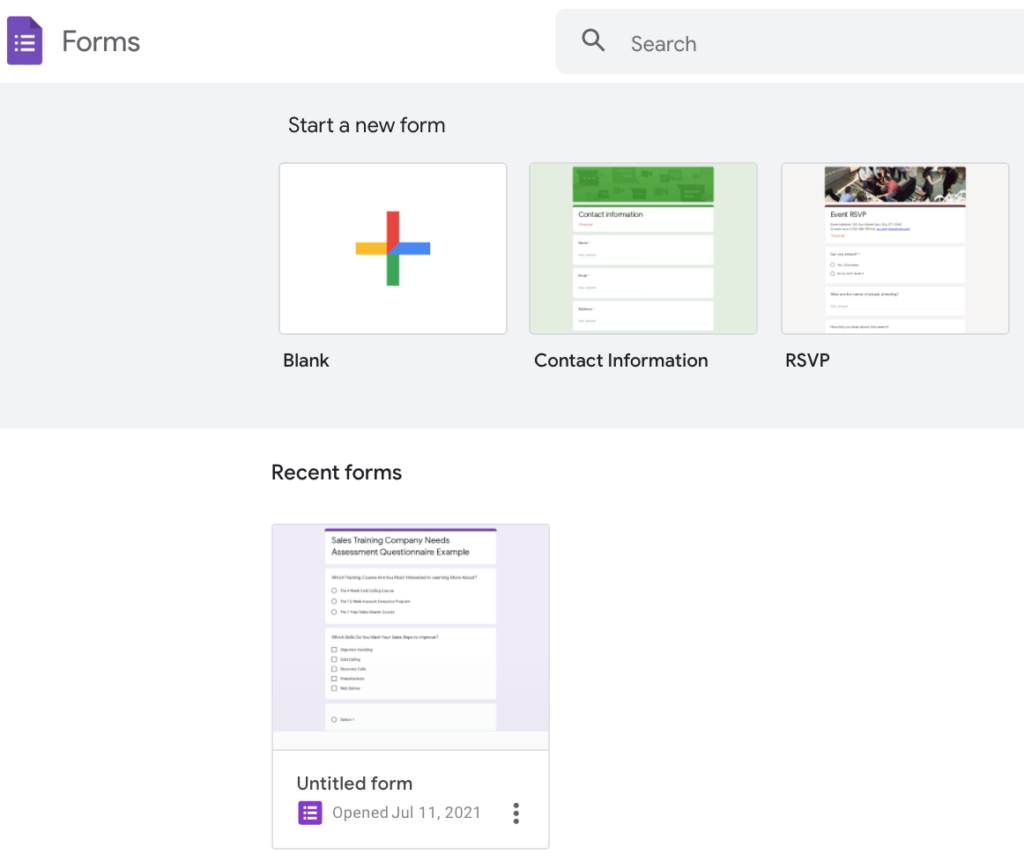
Google Forms page
Once inside a form, begin by naming it something that will help you remember its purpose. But, also make sure the name is something that will make a good impression on the recipient. The name “{Your Company Name} Needs Questionnaire” is perfectly fine.
Then, it’s time to create your 3–5 questions. Include only one open-ended question, and put the rest into multiple choice, multiple answer, or dropdown formats. This forces the lead to answer in terms you understand, and therefore helps you control the lead qualification process. Plus you can analyze the data. It’s also easy to fill out, so few leads should drop out of the form.
3. Send the Questionnaire to the Lead
Once you’ve written your questions, send the form to the lead’s email address. In Google Forms, the “send” button is in the top right corner of your questionnaire. The form will appear as an email in the recipient’s inbox, so give them context by adding your company name to the subject line and writing a short message telling them why you’re sending this questionnaire and what will happen after they fill it out. This increases the chances that the lead fills out the form.
Here’s an example of a subject line and message to include with the questionnaire:
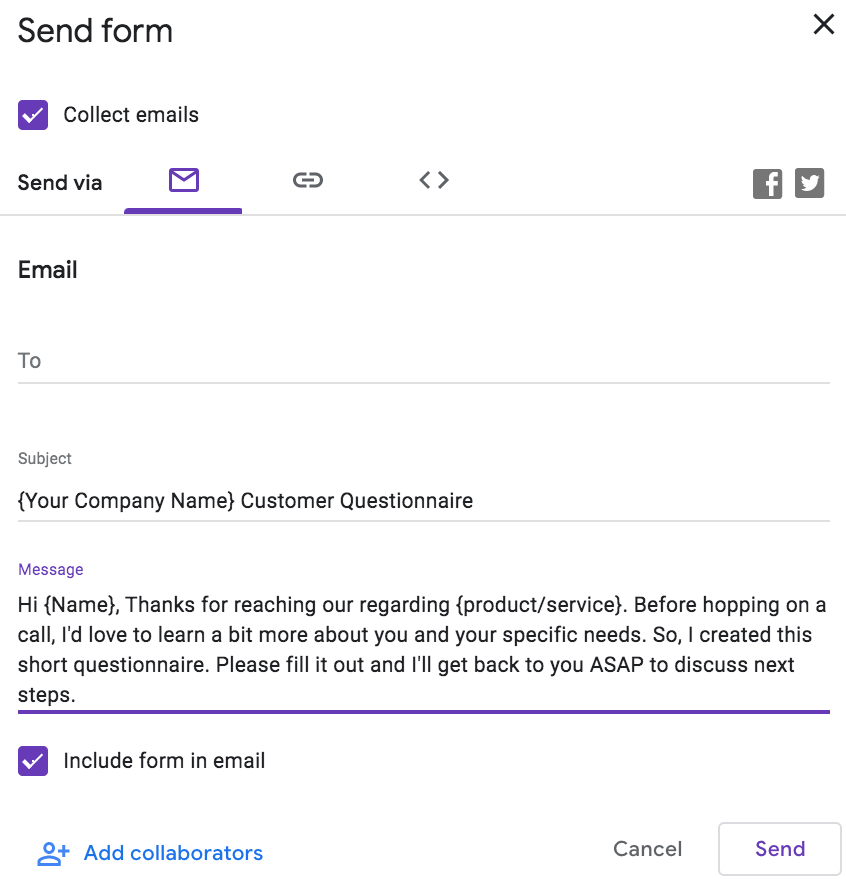
Example send questionnaire
Checking the “collect emails” box at the top will gather the submitter’s email address in your responses section of the Google Form, which can help organize the responses. Checking the “include form in email” box allows the recipient to fill out the questionnaire directly in the email.
4. Update the Lead’s Status & Establish Next Steps
Once the lead has returned the questionnaire, you can find their answers in the responses section of your Google Form. You’ll also get an email alert when they submit. Now, it’s time to evaluate their responses and put them up against your ICP. Does the lead look like a typical buyer? Do they have a need that you can solve? If so, qualify them to SAL status. If not, email them telling them politely that it’s not a fit, and discard the lead.
If the lead or their business shares attributes with your current clients, but they described a need that you cannot satisfy, put them back into the marketing team’s domain. They can then advertise and market to them, educating them about your product or service and the problem it’s actually meant to solve. Perhaps you can sell them down the line.
If the lead is qualified, send them another email, this time to tell them you’d like to host a meeting to learn more about them and their needs. We'll cover this live needs assessment next.
How to Conduct a Live Needs Assessment
To conduct a live needs assessment, schedule and run a discovery call in which you ask the lead a series of questions to assess their ability and desire to buy your solution. Around 25% of these questions will relate to their needs, serving as the needs assessment. The remaining time will be dedicated to learning if they have the budget and authority to buy and an appropriate expected timeline for implementation.
Sometimes, in larger, more hierarchical sales organizations, a sales rep will conduct a needs assessment over the phone without holding a full discovery call. If the lead has needs the company can solve, the rep will then pass them along to a more experienced rep, who will conduct the more comprehensive discovery call.
We wrote an article on how to host a discovery call — give it a read to learn how to do the rest of the discovery, beyond the needs assessment. In this section, we’ll focus on the needs part of the call, which is often the most telling of a lead’s likelihood to buy. If someone desperately needs your help, they’ll try to find a way to make the purchase regardless of their finances, decision-making power, or timing preferences.
The five steps to conducting a live needs assessment are as follows:
- Schedule a Discovery Call: Plan a time to talk with your lead and learn more about them and their business. Say you’d like to see whether your business is a good fit to help them.
- Research the Lead: Read about the lead’s business, responsibilities, hobbies, interests, and more. This context will help you ask pointed questions and build rapport more easily.
- Pick Questions to Uncover the Lead’s Needs: Write open-ended questions to motivate the lead to give an overview of their needs so you can better qualify them.
- Ask Your Questions: Ask your list of questions throughout the conversation, plus any clarifying questions to better understand their responses.
- Label and Confirm the Lead’s Specific Needs: Once you think you understand their needs, repeat it back to them to confirm that your assessment is correct.
We'll dive into how to do each step next:
1. Schedule a Discovery Call
At this point, you’ve deemed a lead worthy of a discovery call. This often means an inbound lead's demographics or online behaviors have reached a certain lead scoring threshold from marketing, or they’ve filled out a web form or questionnaire that tells you they have needs you can satisfy. You’re now going to spend 20–60 minutes asking them questions that assess their level of fitness to buy.
To schedule this call, reach out and ask the lead if they’d be open to a call with you. Say that during the call, you’ll ask questions to see whether they’re a good fit to receive value from your product or service. Here’s an example of an email you might send to an MQL or SAL to plan the call:
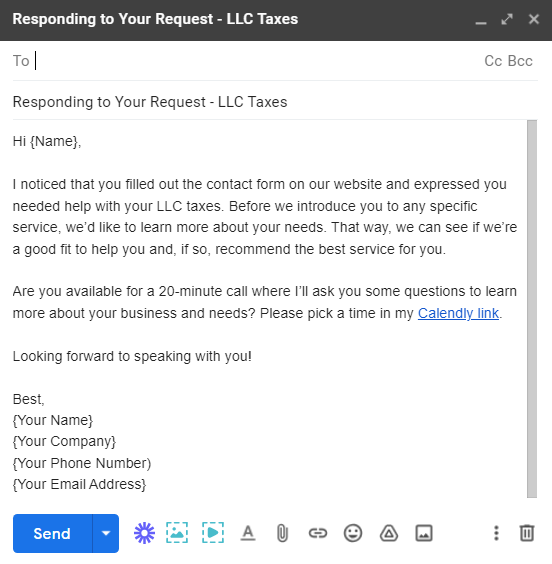
Example email to schedule discovery call
The lead should respond favorably to such a request since you’re showing them you’re dedicated to figuring out how to best serve them. If they put some time on your calendar, it’s time to start researching the lead before the call.
2. Research the Lead
Before deciding which questions to ask a lead in your live needs assessment, learn a bit about them. You can research them in one or all of the ways below:
- Peruse Their Social Profiles and Websites: Find their interests, hobbies, job responsibilities, and day-to-day activity.
- Look Into Their Customer Journey: Figure out what marketing material they’ve consumed and how they’ve explored your website. This information can help you predict their potential needs and develop more personalized questions.
- Check the Forms They’ve Filled Out: If you conduct online needs assessments with web forms and questionnaires, look over the information your company has already collected. If leads complete these forms, they’ll expect you to check them before the call.
Besides qualifying a lead, another goal of a live needs assessment is to build rapport with the lead. Often, this is achieved by discussing matters relevant to the lead’s position, life, or desires.
3. Pick Questions to Uncover the Lead’s Needs
Usually, reps use question frameworks to assess a lead’s fit. A common framework is called BANT, which requires sellers to learn about a lead’s budget, authority (decision-making power), needs, and preferred timeline. The N in the BANT framework is the needs assessment portion, where you ask questions about their needs to see if your product or service can meet them.
Before the call, write down 2–3 needs-related questions that will help you understand their pain points, goals, and support needed from you. On the same page, write 5–6 other qualification questions that specifically assess the other parts of the BANT lead qualification framework. If you’re doing an in-person needs assessment, such as with a lead who just walked into your store, have these questions memorized.
Here are some generic yet effective needs-related questions for a live needs assessment:
- What inspired you to reach out to us?
- What can we help you with today?
- What problems are you currently trying to solve?
- Which goals are you trying to reach?
- What is your top priority right now?
- What is the reason for your dissatisfaction with your current vendor?
- What kind of support are you looking for from your next provider?
As you choose your questions, plan to ask every lead the same ones so you can compare their answers against your ideal customer — this will help you make a qualitative judgment on how well their answers line up with the needs your company solves.
Keep in mind that the number of pre-planned questions you need to ask to understand their need depends on the complexity of your solution and clients. A store clerk might just ask “What are you looking for?” while a financial advisor who creates specialized investment portfolios for individuals with specific financial situations and goals might have to ask up to 10 questions to grasp whether they can meet the buyer’s needs.
4. Ask Your Questions
Ask your chosen questions and listen attentively to the lead's responses. Remember to uncover their goals, their pain points, and the level of service or support they're looking for. This will help you understand what they see as success, what's getting in their way of reaching that success, and what they want from you and your team.
If needed, ask scenario-reactive questions so they expand on their answers. The better you understand, the more likely you are to correctly qualify or disqualify them. For example, look at this hypothetical exchange between a CRM software sales rep and a lead:
Seller: What inspired you to reach out to us? (pre-planned question)
Lead: We need some help tracking our customer interactions.
Seller: And how are you currently handling this? (scenario-reactive)
Lead: We do it with pen and paper.
Seller: Alright, and how many customers do you currently have? (pre-planned question)
Lead: We have 100 but are growing.
Seller: Growing how fast? (scenario-reactive)
Lead: Well, we just started a new marketing strategy that’s doubling our lead generation every day. It’s hard to handle all of them.
Perhaps this buyer wanted to track leads but was unaware that the CRM could also automate some of their lead qualification actions and make their lead volume manageable. This is why it’s crucial to expand on your pre-planned questions when needed. Now the seller has more ammo for their sales pitch, presentation, and proposal when the time comes. The more needs you can create in the buyer’s mind, the more likely you are to close the deal.
5. Label & Confirm the Lead’s Specific Needs
After you’ve done your exploring and have a solid understanding of what your lead needs help with, regurgitate their needs back to them in your own words. Labeling and restating the needs ensures that you are correct in your assessment and that you’ll give them the right solution, and it prevents you from assuming false needs and qualifying someone you can’t help.
To restate their needs, say, “It sounds like you need some help with {main problem or goal}. Did I get that right?” If the lead says no, don’t worry — this is common and easily resolved. Simply continue asking them more questions until you think you understand, then ask again. If they’re reasonable, they’ll appreciate your taking the time to listen and understand them. When they say “that’s right,” it’s time to decide whether they’re qualified or disqualified.
If your product or service can meet the lead’s needs, they’re qualified on this front. Continue the discovery call and assess them on your other qualification criteria, like budget or authority to purchase. Or, schedule them time with the rep in charge of running longer discovery calls. If you disqualify them, end by saying you can’t help them, and try to recommend a different business.
3 Best Needs Assessment Examples
It can be helpful to look at the online methods other businesses have used to assess their potential buyers' needs. Below, you’ll find a Google Forms questionnaire that would be emailed to an MQL, a B2B online web form for site visitors to fill out, and a B2C online quiz placed across various marketing channels to capture lead information while also assessing their needs. Let’s go through each example and why it works well.
Here’s an example of a Google Forms online questionnaire that we created for a fictitious sales training company. It gets right to the point and only asks two questions of the lead: which service they want to learn about, and what they want out of the course. This should collect enough information to assess the lead’s needs and see if they’re a good enough fit for a more comprehensive discovery call.
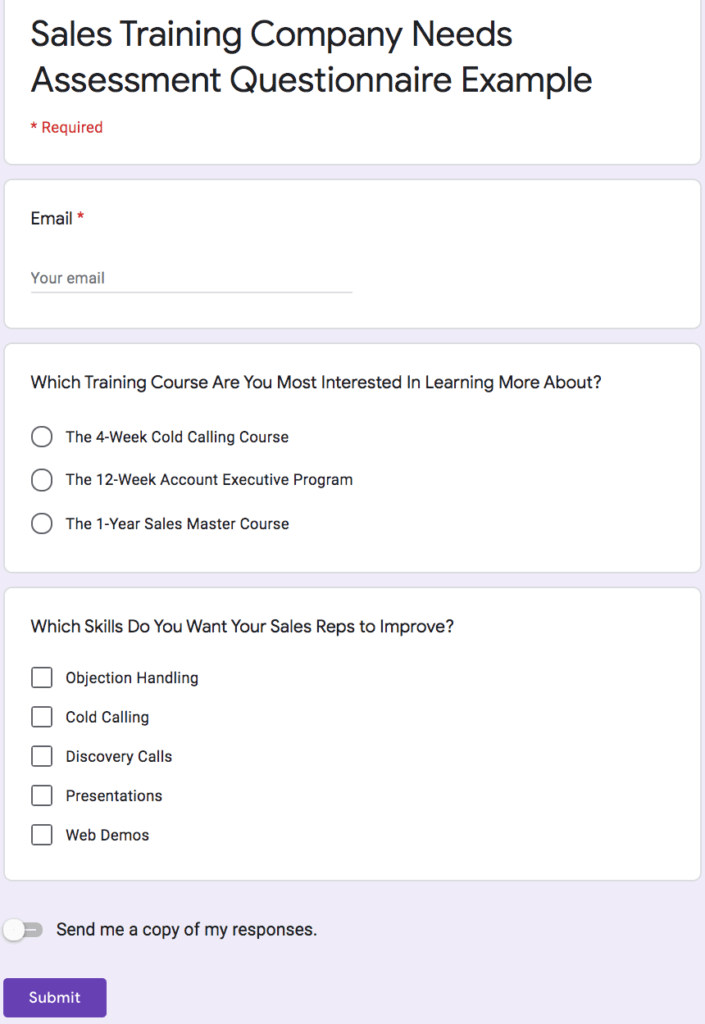
Example Google Forms questionnaire
This is a B2B example of a needs assessment in the form of a “contact us” form on a tax preparation services company’s home page. A form like this does two things. It captures lead information like email address, which the seller can use to contact the lead. Plus, it assesses their needs, which helps the seller determine the appropriate next steps.
If the lead checks any of the boxes regarding services offered, they’re qualified for a discovery call. The lead also might use the “How can we help?” section to elaborate on the need they selected, giving the seller even more information. If they write something in the section that doesn’t line up with the services the tax company provides, however, the sales rep or marketing staff will likely disqualify the lead and politely guide them in another direction.
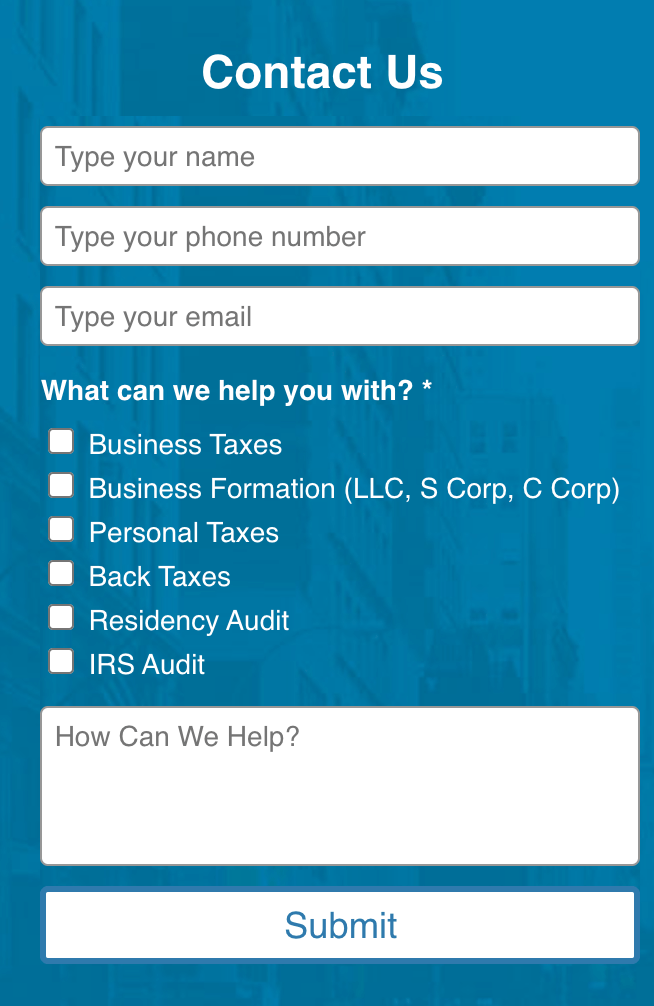
Example needs assessment web form
This online quiz is an example of a B2C ecommerce needs assessment technique. It’s not so much to qualify the lead for a discovery call. Instead, it’s to collect information about the lead and then recommend a product based on their gender, age, fitness goal, and training experience. This quiz can be found on Built With Science’s home page, as well as within the owner’s blog content.
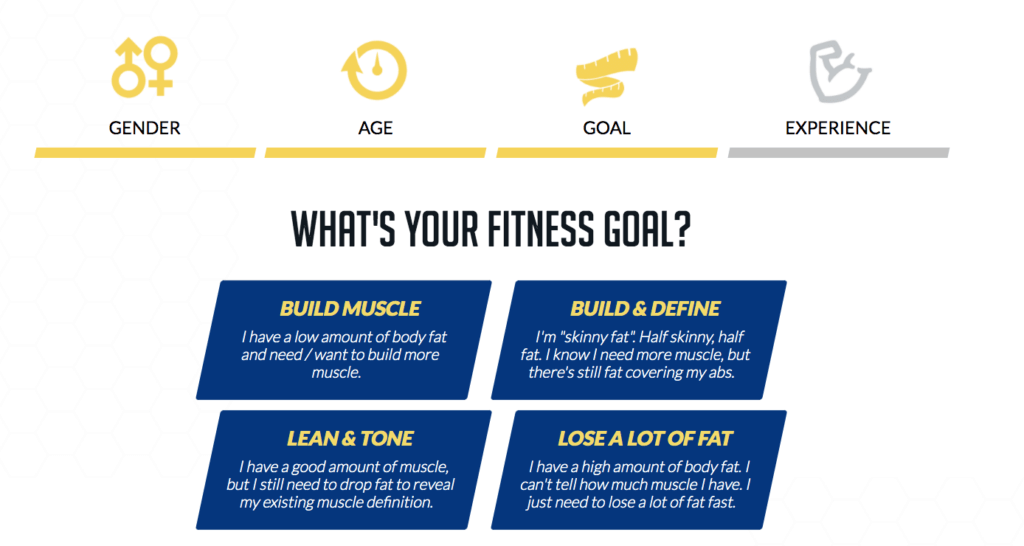
Example needs assessment quiz
As you build your own needs assessment and push it live, keep your eyes peeled so you can continue improving it using other assessments you see online or even take yourself. Creating the perfect needs assessment for your business will be a continual work in progress.
Top 6 Needs Assessment Questions to Ask
When you're choosing questions to include in a virtual or live needs assessment, remember that your main objective is to learn about your lead's problems, goals, and amount of support needed so you can make a determination regarding whether you can fulfill their need. Below are a few effective questions to consider asking, regardless of your company type. We recommend asking about their goals first, then their pain points, and finally their required service level.
"Which KPIs Are You Focused on Improving at the Moment?"
This is a goal-related question that will tell you what exactly your lead wants to get out of using your product or service. Understanding what they're trying to achieve by working with your business can help you prepare to pitch to them if they make it past qualification to the nurturing stage of your pipeline.
"Which {Process or Task} Would You Like to Improve?"
This is a great question to ask whether you sell a product or a service. For example, product sellers could modify it to "Which administrative task would you like automated?" Service sellers, on the other hand, could ask "Which process would you like our team's input and support on?" Either will help you decide whether their need is one you can fulfill.
"Please Tell Us a Bit About What You're Struggling With."
Reserve this question for a questionnaire with an open-ended question or for a live call with your lead. Requesting information in this slightly vague, open-ended way can be useful for getting your lead to tell you everything you need to know about their pain point.
"Which Problem Are You Experiencing Most?"
This question is quick and straightforward, so it's a great one to ask in a multiple choice or multiple answer format to get to the bottom of their pain point.
"How Many {Position Type} Do You Have on Your Team?"
This question can start to get into the resources they have on hand and how they're looking to have you fill any gaps, or it can tell you how many people on the team need to get up to speed on the new product. Small teams might need more ongoing support than an enterprise company, or large teams may want more extensive onboarding to esure all members are well trained on your product or service.
"Which of the Following Services Are You Most Interested In?"
We recommend ending with this question so you can first hear what their goals are and what's getting in the way of those goals, and then they can tell you how they want your help reaching those objectives or solving those problems.
Choose a few questions from these options, and then organize them according to your process. For example, if you generate your own leads through sales prospecting and you jump straight to a discovery call, you should ask open-ended questions that will prompt your lead to elaborate. If you implement a web form or online questionnaire, however, using multiple choice or multiple answer questions would make sense so you increase the chance that your lead will submit it.
Bottom Line
A needs assessment is the systematic approach to learning the needs of a potential client. It’s a crucial part of the lead generation and nurturing stages. Not only does it help you qualify your leads, but it also provides you with key information about the lead’s goals, priorities, and pain points that you can use as selling points throughout the rest of the sales process. Try implementing all three stages to see how it affects your ability to properly qualify your leads.
