


Salesforce and HubSpot CRM are industry-leading CRMs, albeit for different reasons. HubSpot CRM has a reputation for being an affordable, accessible option suitable for small businesses that may be new to CRM software. Salesforce is best known for providing large teams with a wealth of customizable, state-of-the-art features. Breaking down the differences between HubSpot CRM and Salesforce will give you clarity in deciding if either is right for your business.
Here are the situations when you want to use either HubSpot CRM or Salesforce:
- HubSpot CRM: Best for small-to-medium businesses needing a user-friendly CRM with sales and marketing functionality (free to $1,200+ per month for 10+ users)
- Salesforce Sales Cloud: Best for larger businesses seeking an enriched CRM with advanced analytics, automation, and customization ($25 to $330 per user, per month)
While HubSpot CRM and Salesforce are two industry leaders, they might not be the most ideal solution for you. If you’re looking for other options, check out our articles on the best overall CRMs and the best industry-specific CRM solutions. Otherwise, keep reading for at-a-glance information about these two platforms.
- Salesforce vs HubSpot CRM at a Glance
- Best for Pricing: HubSpot CRM
- Best for Core Features: Salesforce
- Best for Ease of Use: HubSpot CRM
- Best for User Support: HubSpot CRM
- Best for Reporting: Salesforce
- Best for Workflow Automation: Salesforce
- Best Mobile App: Tie
- Best for App Integrations: Salesforce
- Who Shouldn’t Use Salesforce & HubSpot CRM?
- 3 Best Alternatives to Salesforce & HubSpot CRM
- How We Evaluated Salesforce vs HubSpot CRM
- Bottom Line: Salesforce vs HubSpot CRM
Salesforce vs HubSpot CRM at a Glance
 |  | |
|---|---|---|
| Price Range (Annual) | Free to $1,200+ per month for 10+ users | $25 to $330 per user, per month |
| Core Features | Straightforward tools that help sales teams better understand their clients | Advanced tools that offer deep insights into the customer journey |
| Ease of Use | Accessible to users of all experience levels | Geared toward users already familiar with CRMs |
| Customer Service | 24/7 email and chat support for all plans; phone support starts at Professional plan | 24/7 email and chat support for all plans; phone support starts at Power plan |
| Reporting | Suitable for basic CRM reports | Capable of building any type of CRM report |
| Workflow Automation | Task automation mainly for the sales pipeline | User-friendly approach to basic automation |
| Mobile App | Integrates with messaging and calendar apps | Powered by AI and caches data for offline access |
| App Integrations | Over 1,000 apps, 45 of which are free via HubSpot App Marketplace | Over 7,000 apps, but only 1,200+ are free via AppExchange |
| Visit HubSpot | Visit Salesforce |
HubSpot CRM and Salesforce perform many of the same functions, but each platform excels in its own way. Continue reading to compare the two CRMs in six main criteria and crucial features (reporting, workflow automation, and mobile application), or see our scoring logic below.
Best for Pricing: HubSpot CRM
| | |
|---|---|---|
| Free-for-Life Option | Yes, for up to 2,500 users | No |
| Free Trial | No | 30 days |
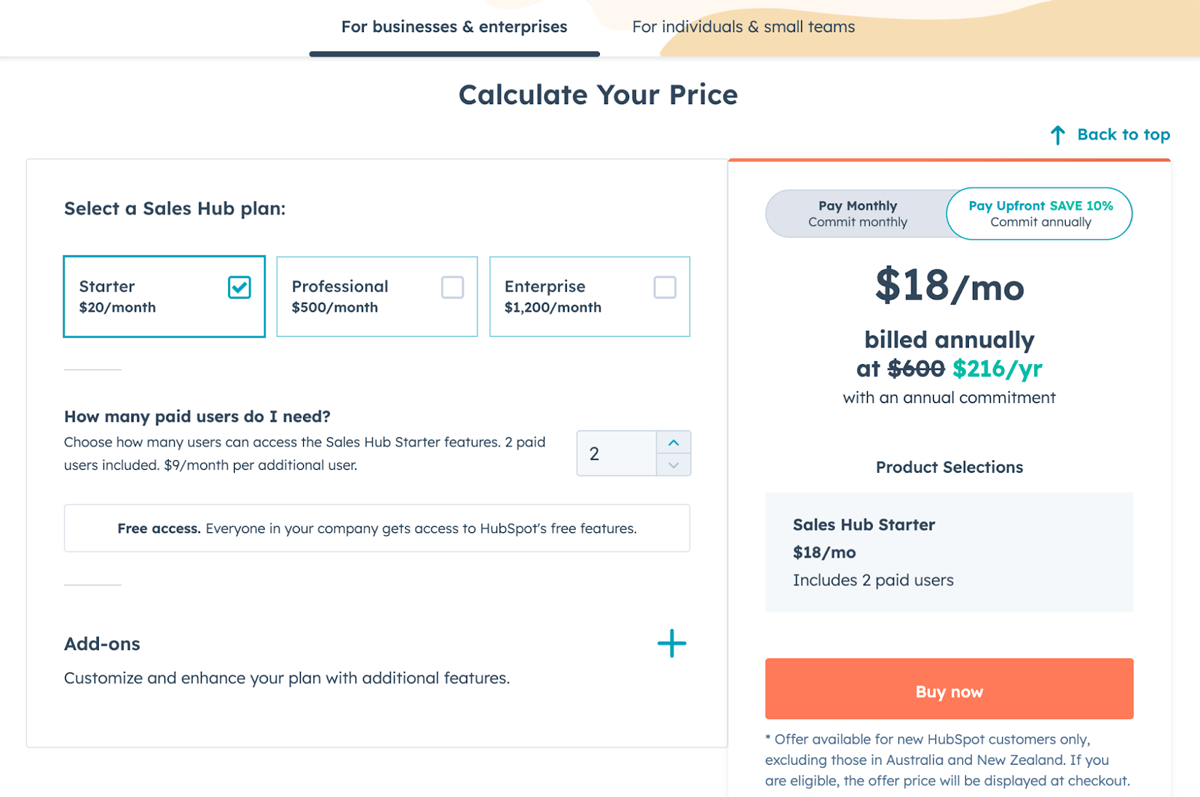
| Starting Price (Annual) | $18 per month for 2 users | $25 per user, per month |
| Enterprise Price (Annual) | $1,200 per month for 10 users, then $120 per user, per month | $330 per user, per month |
| Add-Ons | From $25 per month | From $5 per user, per month |
| Monthly Billing | Yes (except Enterprise) | No |
| Visit HubSpot | Visit Salesforce |
Winner: HubSpot CRM is the more economical choice, especially considering the strength of its free-for-life platform.
HubSpot CRM has the edge over Salesforce when it comes to affordability. HubSpot CRM’s free version is an excellent option for budget-conscious small business owners who want a robust set of lead generation and contact management tools. Plus, the free plan supports up to 2,500 users, so companies can continue to use the software at no cost as they scale. When subscribers want to upgrade their plan, they can do so from HubSpot’s free CRM to Sales Hub.
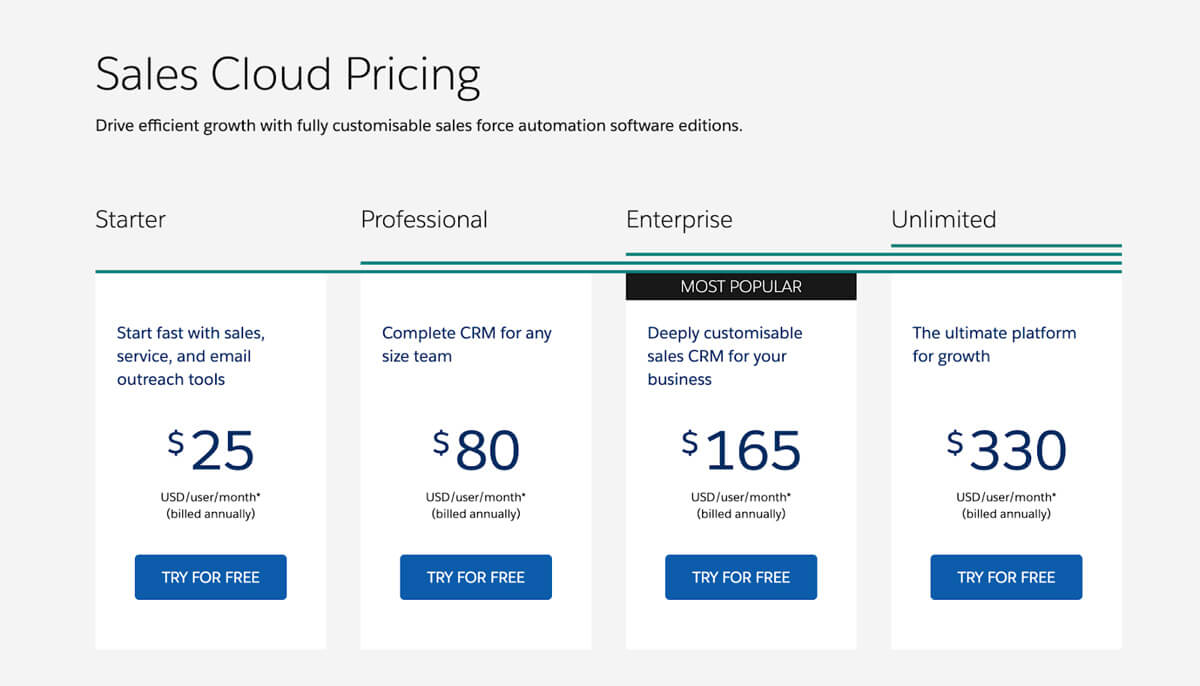
Salesforce Sales Cloud is pricier than HubSpot CRM overall, especially if you opt for its Unlimited plan priced at $330 per user, per month, or for any of its myriad add-on features. Its entry-level Starter plan, offering basic CRM features and contact and deal management, costs $25 per user per month, which is $16 more than HubSpot’s lowest paid plan’s per-user price. Salesforce doesn’t have a free version of its software, but there's a 30-day trial across all tiers.
Best for Core Features: Salesforce
| | |
|---|---|---|
| Contact Management | Contact website activity; auto segment updates | 360-degree overview; adds data from Gmail and Outlook |
| Lead Management | Landing pages; lead routing to appropriate reps | Tracks lead sources; monitors multi-channel campaigns |
| Pipeline Management | Adds deals to pipeline from contact records; auto-logs activities | Notifications when action is needed; opportunity splits |
| Advanced Features | Advanced analytics; deal and company scoring | Custom field forecasts; pipeline inspection view |
| Visit HubSpot | Visit Salesforce |
Winner: Salesforce has one of the deepest CRM feature sets we’ve seen and will appeal to businesses seeking advanced sales tools.
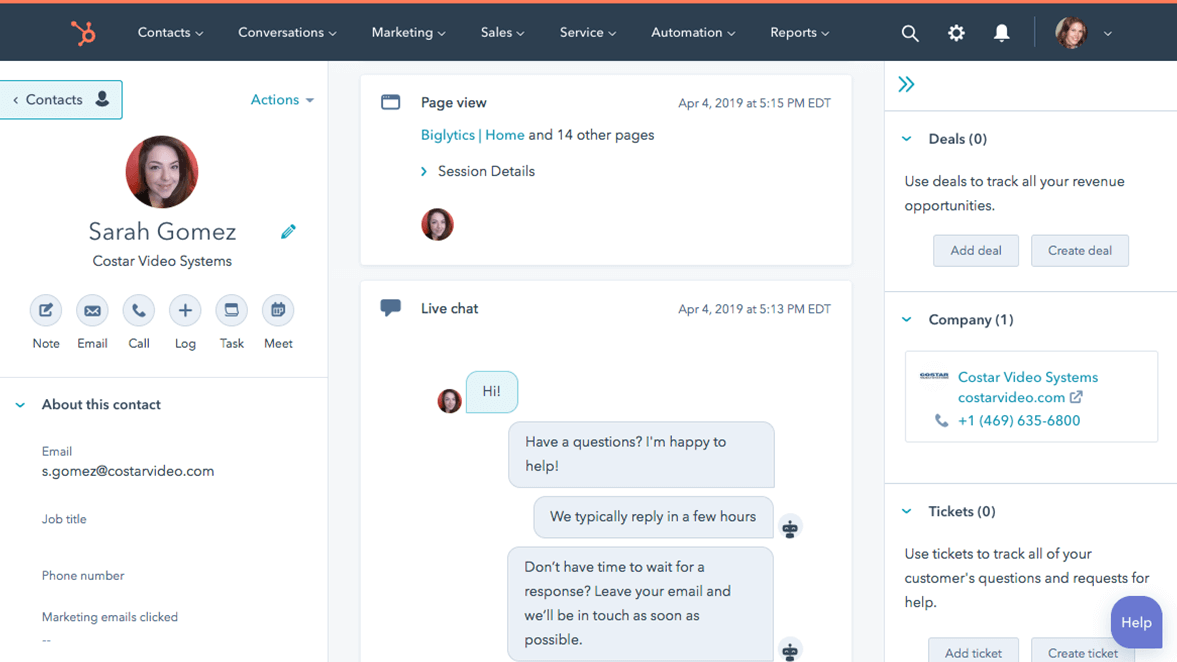
HubSpot CRM has a solid feature set to help businesses effectively manage contacts, track opportunities, and generate leads. Many of these tools are available on HubSpot’s free platform; premium upgrades include advanced analytics, sales forecasting, and contact scoring. HubSpot CRM’s core CRM features are straightforward and accessible so anyone can learn how to use them in a short amount of time, regardless of technical skill.
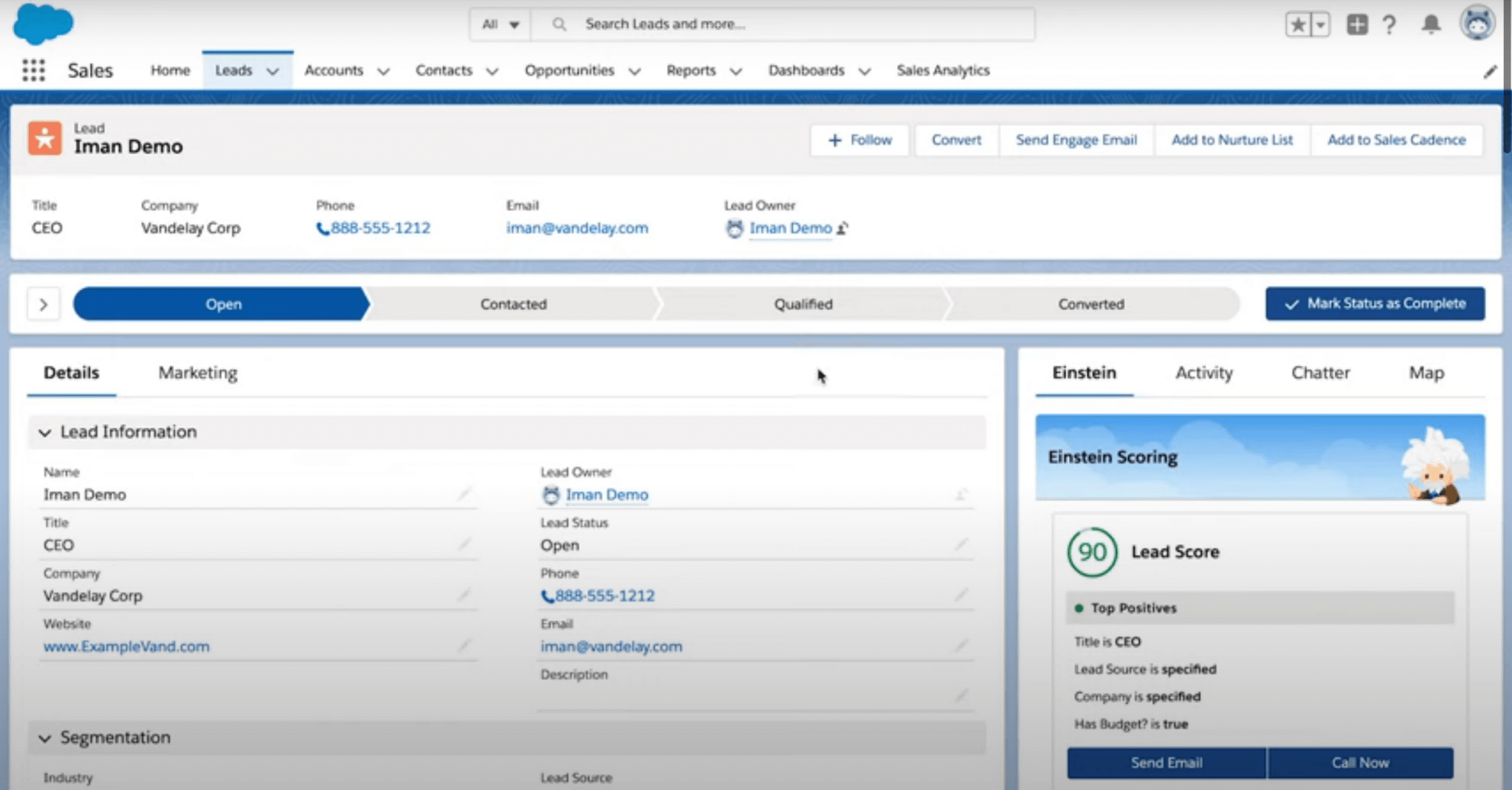
Salesforce Sales Cloud, however, boasts powerful features to help sales professionals optimize their workflow, access comprehensive contact information, generate accurate forecasts, and stay on top of every opportunity. Even the Starter tier includes custom reports and advanced automation tools. Of course, such high-level features contribute to Salesforce’s steep learning curve – but with proper time and training, sales professionals will see the benefits.
Best for Ease of Use: HubSpot CRM
| | |
|---|---|---|
| Ease of Setup | Fairly quick and easy | Time consuming and complex |
| Learning Curve | Minimal | Steep |
| Common Positive Reviews | Intuitive interface, seamless integration, fantastic support | Highly customizable, detailed reporting, lots of integrations |
| Common Negative Reviews | Weak reporting, limited customization | Confusing interface, prone to lags and crashes |
| Knowledge Base | ✔ | ✔ |
| Community Forums | ✔ | ✔ |
| Certification Programs | HubSpot Academy | Trailhead Academy |
| Visit HubSpot | Visit Salesforce |
Winner: HubSpot CRM is accessible to users of all experience levels thanks to its intuitive interface and relatively simple setup.
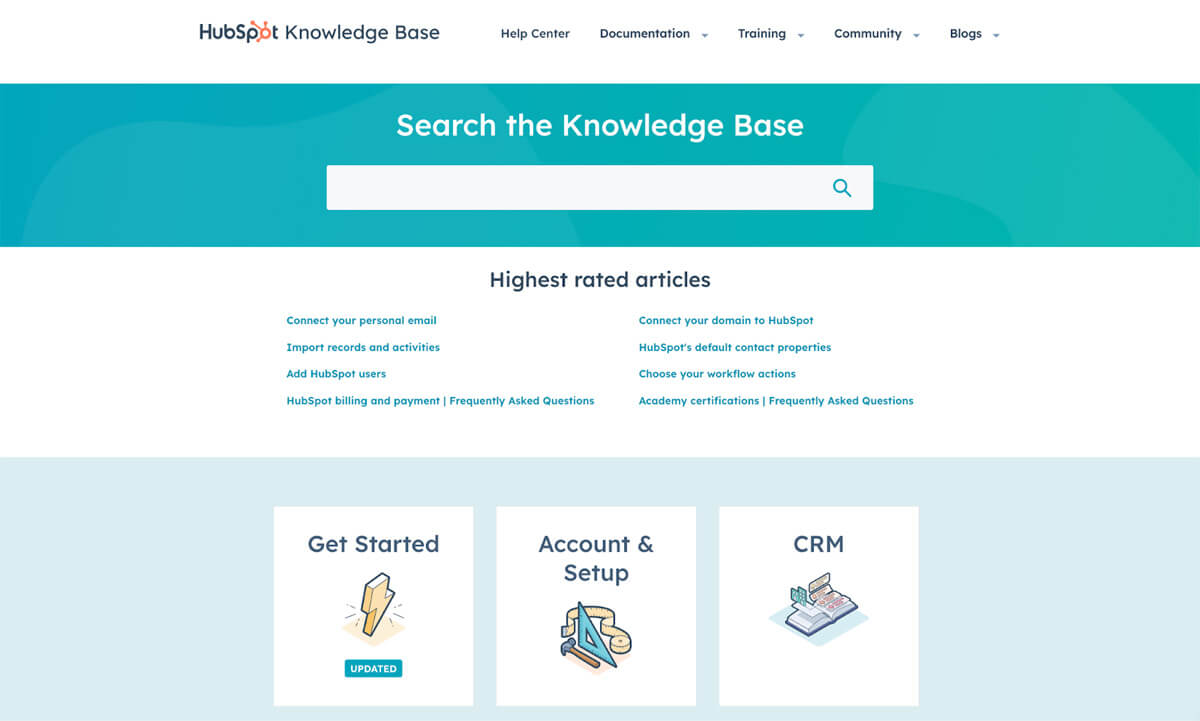
HubSpot CRM is regarded as one of the most user-friendly CRMs. Its guided setup, along with its comprehensive knowledge base and active community forum, make implementation a fairly simple task that likely won’t require outside assistance. Users appreciate HubSpot’s intuitive interface and how easy it is to add third-party apps with its step-by-step guides and videos, although many subscribers say they wish reporting and customization were more robust.
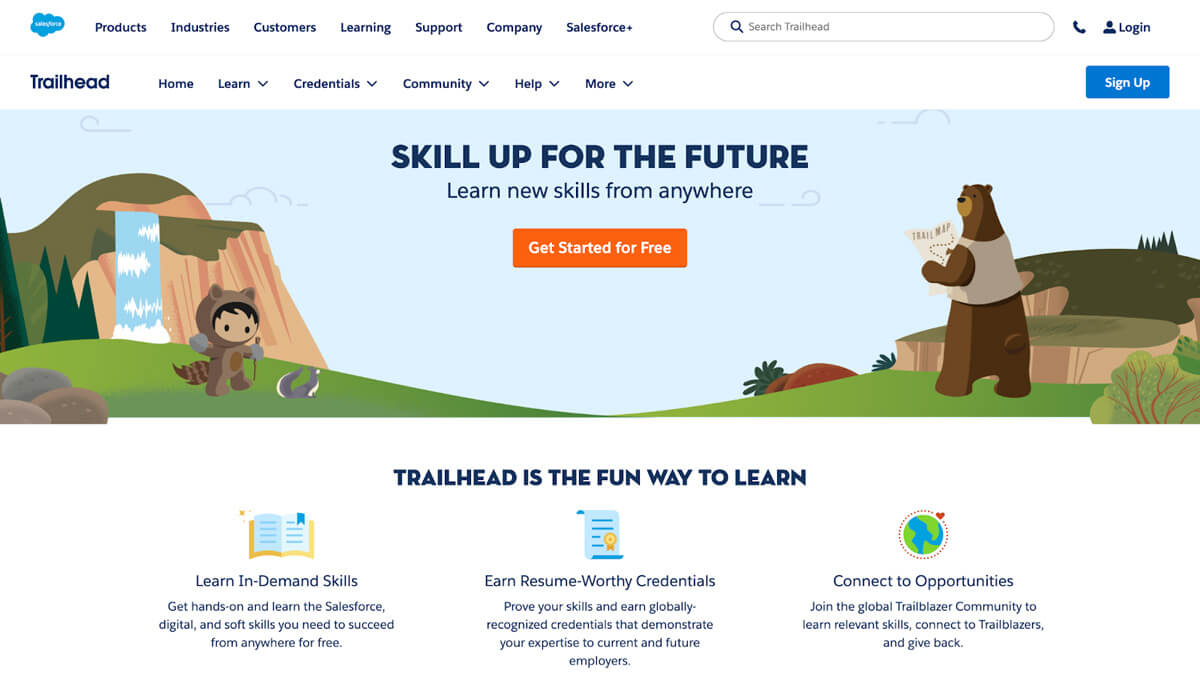
Salesforce has plenty to offer when it comes to features and flexibility, but the trade-off is a steep learning curve and a clunky interface. Setup is a time-consuming process due to the malleable nature of the software. Despite that, fans of the Salesforce platform praise its high level of customization, along with its excellent reporting tools and thousands of integrations. Additionally, anyone can access Trailhead Academy for both free and paid online learning courses.
Best for User Support: HubSpot CRM
| | |
|---|---|---|
| Standard Business Hours | 24/7 | Weekdays during local business hours |
| Support Channels | Live chat, email, phone (Professional and Enterprise plans only) | Phone, email, live chat for all plans |
| Onboarding | ✔ | ✔ |
| Visit HubSpot | Visit Salesforce |
Winner: HubSpot CRM includes all-hours support as standard in its paid plans – not to mention, its user support team has an excellent reputation.
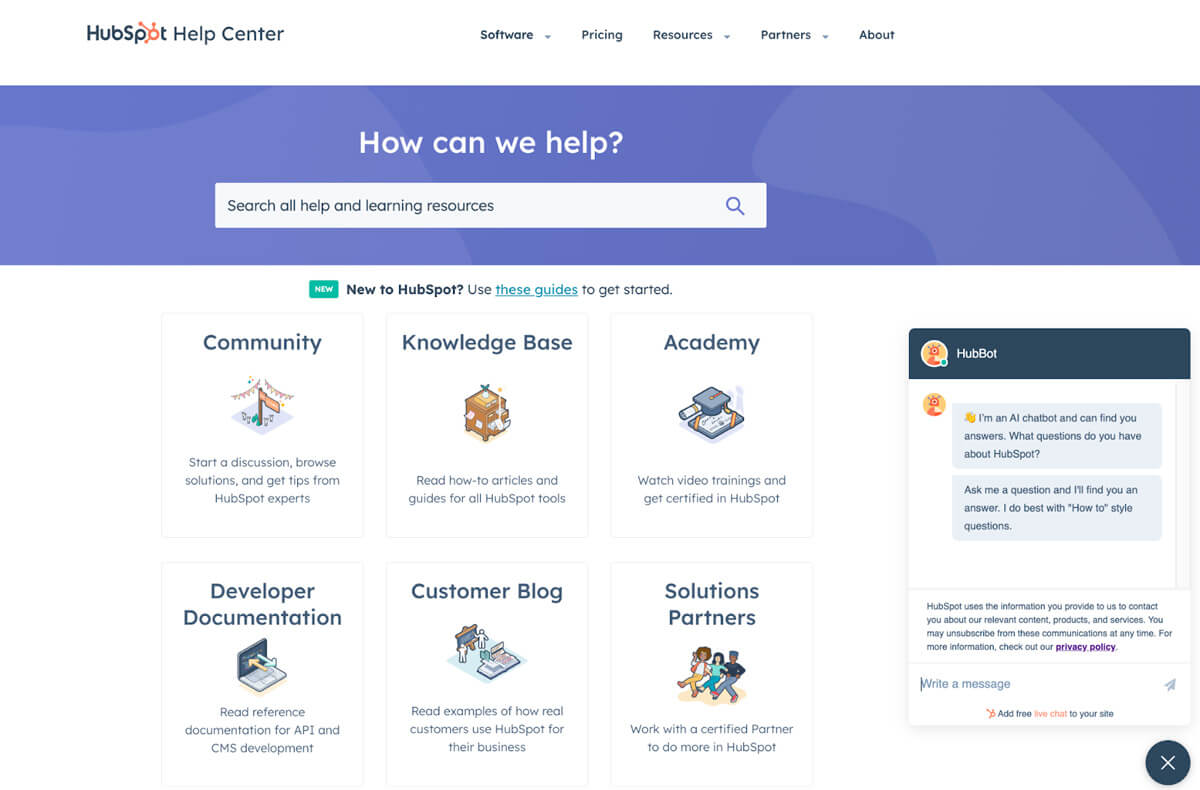
HubSpot CRM subscribers can access its live chat and email assistance 24/7, as well as phone support for professional and enterprise users. Subscribers can purchase Sales Hub’s remote onboarding services for $1,000 (Professional plan) to $3,000 (Enterprise plan). While free CRM users are unable to access these support channels, they can interact with other HubSpot users in the community forum or use the various resources available in its help center.
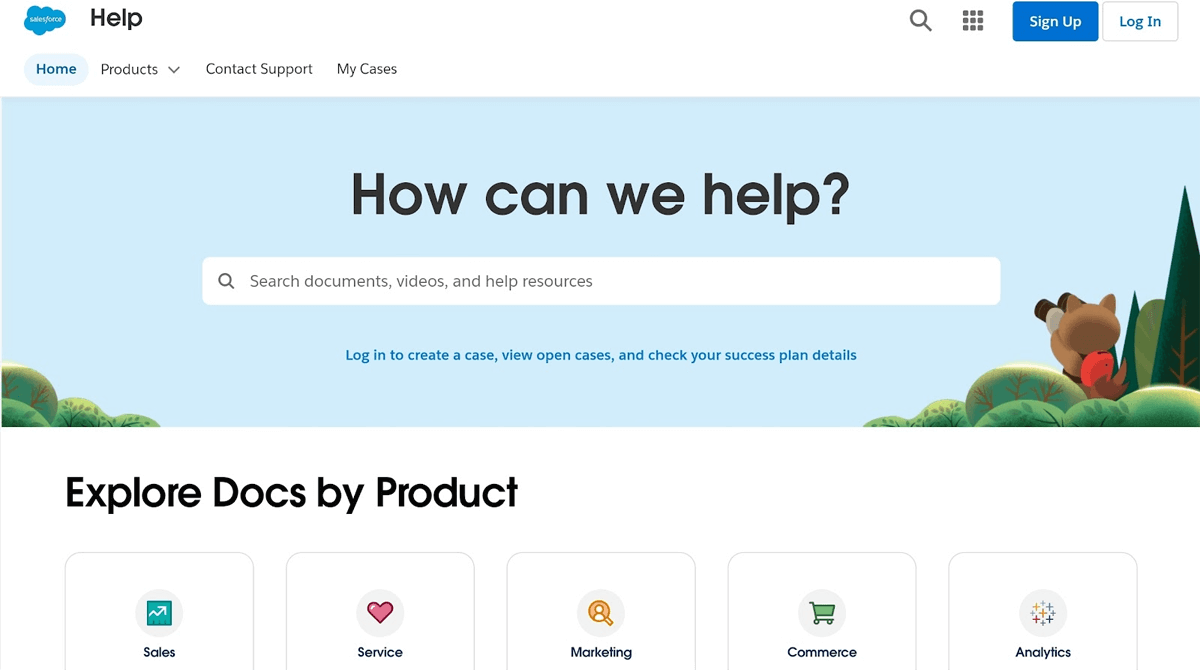
All Salesforce tiers come with email, phone, and live chat support, along with guided onboarding via Trailhead Academy. The Standard Success plan is included in all licenses, but users for Professional tiers and up can opt for the Premier and Signature Success plans. While premium plans offer 24/7 support, one-on-one coaching, and advanced diagnostics, purchasing them on top of Salesforce plans might be costly for smaller companies.
Best for Reporting: Salesforce
| | |
|---|---|---|
| Basic Report Templates | All plans | All plans |
| Custom Reporting | Professional and Enterprise | All plans |
| Advanced Reporting | Professional and Enterprise | Enterprise and Unlimited |
| Reporting Dashboard | Up to 30 reports per dashboard | Up to 20 reports per dashboard |
| Visit HubSpot | Visit Salesforce |
Winner: Salesforce gives businesses the freedom to build any type of CRM report they need to make actionable decisions.
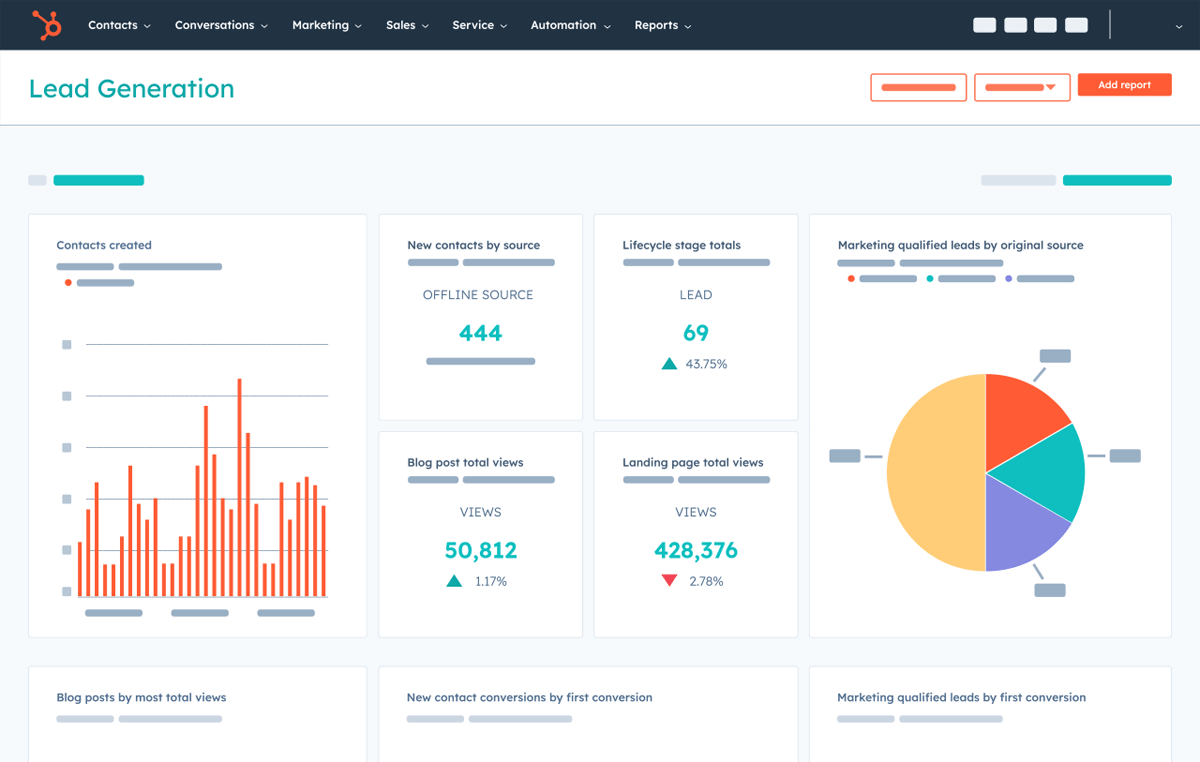
HubSpot CRM includes a wide selection of pre-made report types that users can filter and customize, albeit with limitations. For more granular reporting, HubSpot CRM offers a custom report builder, although it’s only available with its Professional and Enterprise plans. For baseline reports, HubSpot CRM is quite reliable, but businesses that require regular deep data dives and real-time sales insights may want to consider Salesforce instead.
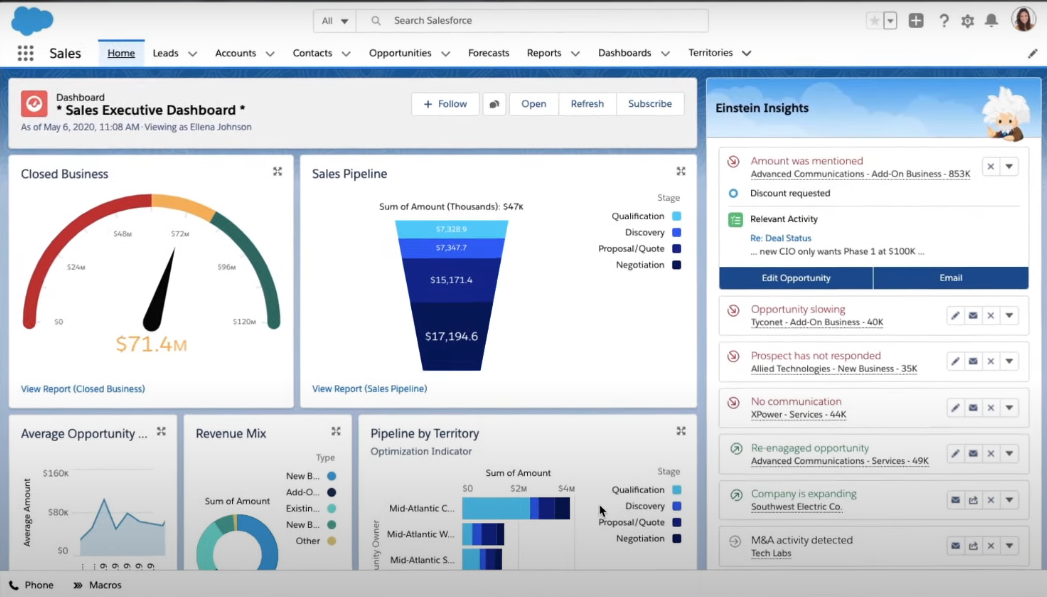
Salesforce offers basic templates and custom reports at all price points. Its higher-tier plans include advanced reporting features such as cross-filters and buckets to help businesses better organize and group their data. Its custom report builder has more variables than HubSpot and helps you build comprehensive reports based on any CRM metrics you wish to track. Einstein GPT also provides personalized recommendations from large amounts of customer data.
Best for Workflow Automation: Salesforce
| | |
|---|---|---|
| Workflow Editor Interface | Visual point-and-click | Visual point-and-click |
| Workflow Types | Contacts, companies, deals, quotes, conversations | Deal management, cross-object processes |
| Workflow Rule Limits | Free: No workflows offered Starter: Varies by deal stage Pro: Up to 300 rules Enterprise: Up to 1,000 rules | Starter: No workflows offered Professional: Up to 5 flows Enterprise: No limits Unlimited: No limits |
| Workflow Templates | ✔ | ✔ |
| Workflows From Scratch | ✔ | ✔ |
| Visit HubSpot | Visit Salesforce |
Winner: Salesforce is capable of automating a wide variety of simple and complex tasks, which will benefit busy sales teams that need to optimize their processes.
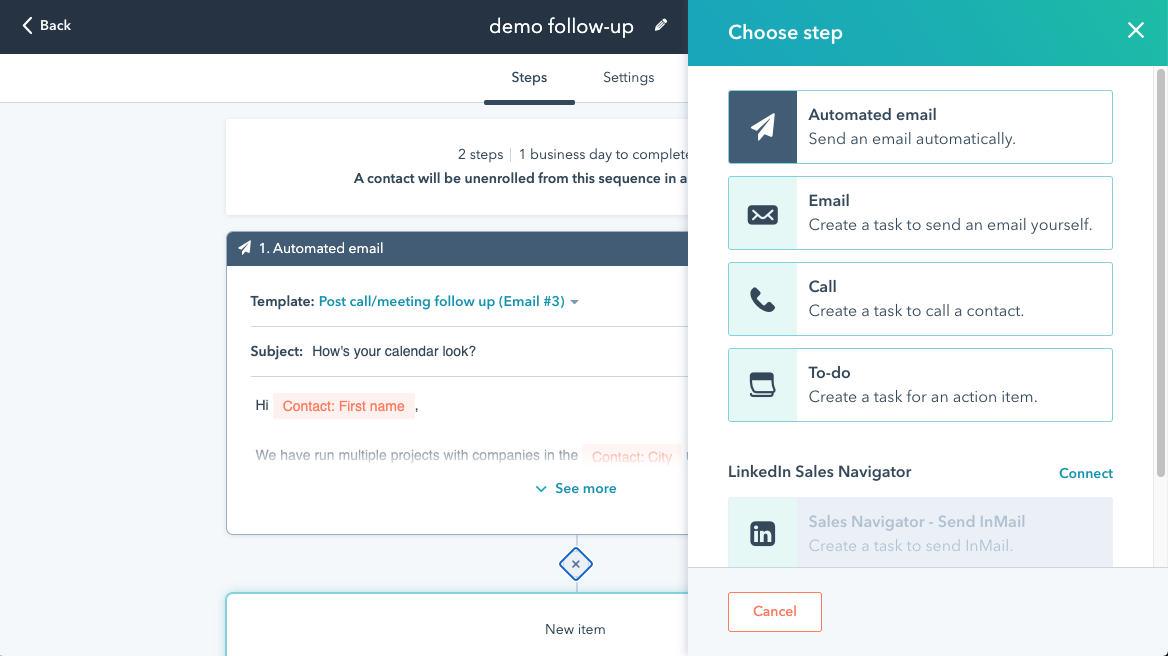
HubSpot CRM’s workflow automation features are largely tied to the sales pipeline and basic marketing processes. For instance, it’s able to automate email follow-ups, data entry, and team-wide notifications when certain actions are taken. Depending on the plan, users can set up as many as 1,000 workflow rules. However, its workflow automation feature is noticeably missing from HubSpot’s free-for-life platform.
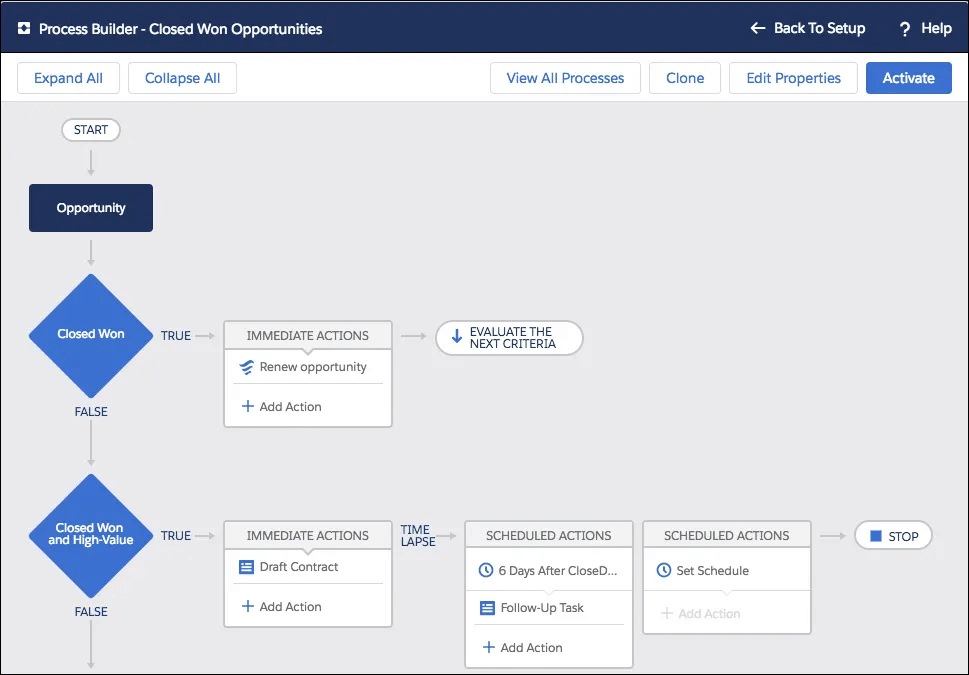
Salesforce, on the other hand, supports a much broader range of workflow automation functions. Its point-and-click Lightning Flow Automation tool enables users to build flows and processes around nearly every function of the CRM. It can also automate internal admin requests such as expense reports and travel approvals. Salesforce’s latest development of combining Einstein GPT and Data Cloud helps build more robust, intelligent workflows.
Best Mobile App: Tie
| | |
|---|---|---|
| Mobile App Cost | Free | Free |
| Mobile App Platforms | iOS and Android | iOS and Android |
| Mobile Sync With CRM | ✔ | ✔ |
| Offline Mode | Contacts, notes, deals | Various items |
| Standout Features | Integration with other mobile apps, business card scanner | AI-powered insights, customizable elements |
| Visit HubSpot | Visit Salesforce |
Winner: HubSpot CRM and Salesforce both performed well in this category, and each mobile CRM has standout features.
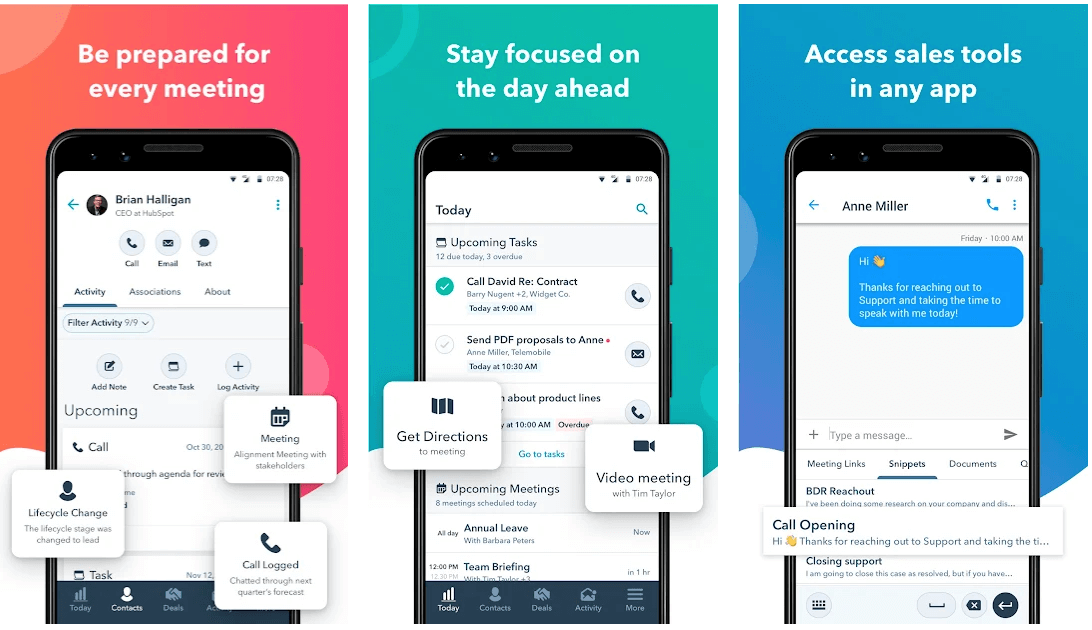
HubSpot CRM has a mobile app that features many of the user-friendly lead management tools of its parent software. It also includes app-exclusive functions like a business card scanner and the HubSpot Keyboard, which inserts HubSpot CRM contact data into compatible third-party messaging and scheduling apps. While its offline access is not as robust as Salesforce, HubSpot’s task manager is excellent for teams collaborating in sales and marketing activities.
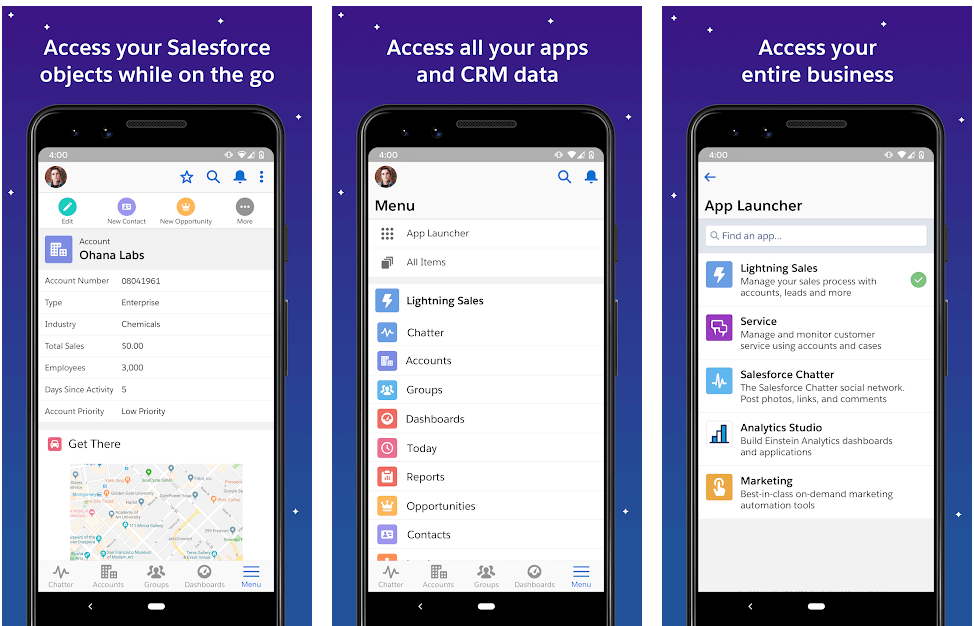
Salesforce’s mobile app syncs with the desktop version and allows for data caching of up to seven items at a time, including dashboards and opportunities. The Salesforce mobile app also features AI-powered insights courtesy of Einstein Analytics, along with the ability to customize the app to match company branding. Although Salesforce’s mobile reporting is among the best in the market, solopreneurs and smaller companies might need a more cost-efficient option.
Best for App Integrations: Salesforce
| | |
|---|---|---|
| App Marketplace | HubSpot App Marketplace | Salesforce AppExchange |
| Number of Total Apps | Over 1,000 | Over 7,000 |
| Number of Free Apps | 45 | Over 1,700 |
| Visit HubSpot | Visit Salesforce |
Winner: Salesforce wins based on the amount of integrations it offers, including the number of free apps available via AppExchange.
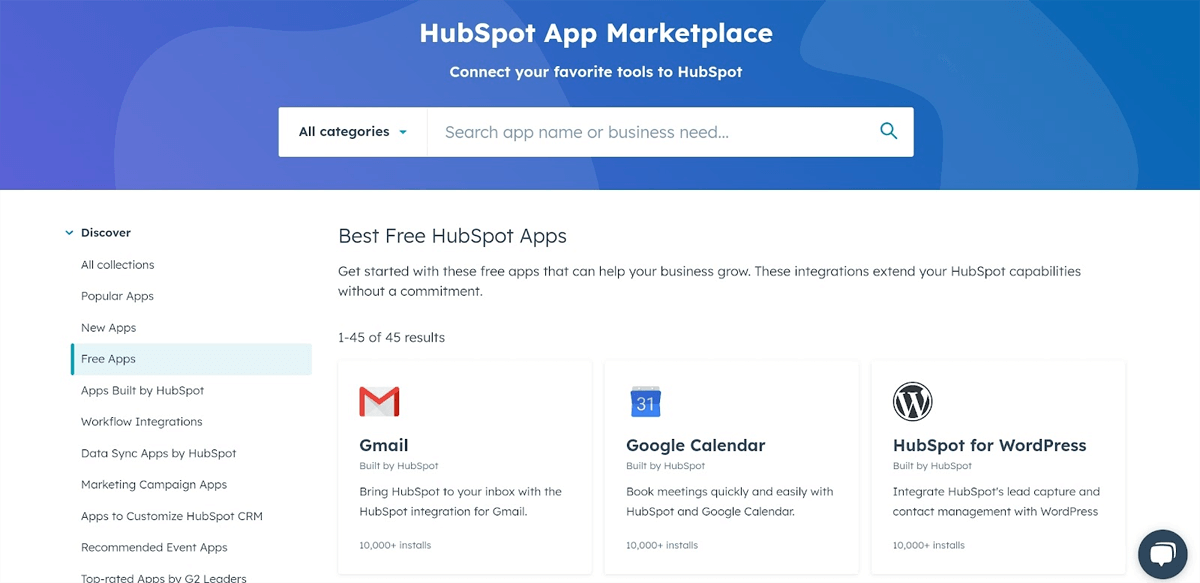
HubSpot CRM and Salesforce both support a large volume of third-party applications. The ever-growing HubSpot App Marketplace currently has over 1,000 native integrations, including Gmail, Mailchimp, and Facebook Messenger. HubSpot also provides a detailed guide on how to sync apps with videos, resources, and user reviews. However, only 45 of those applications are free, which is limited compared to Salesforce’s 1,700+ free integrations.
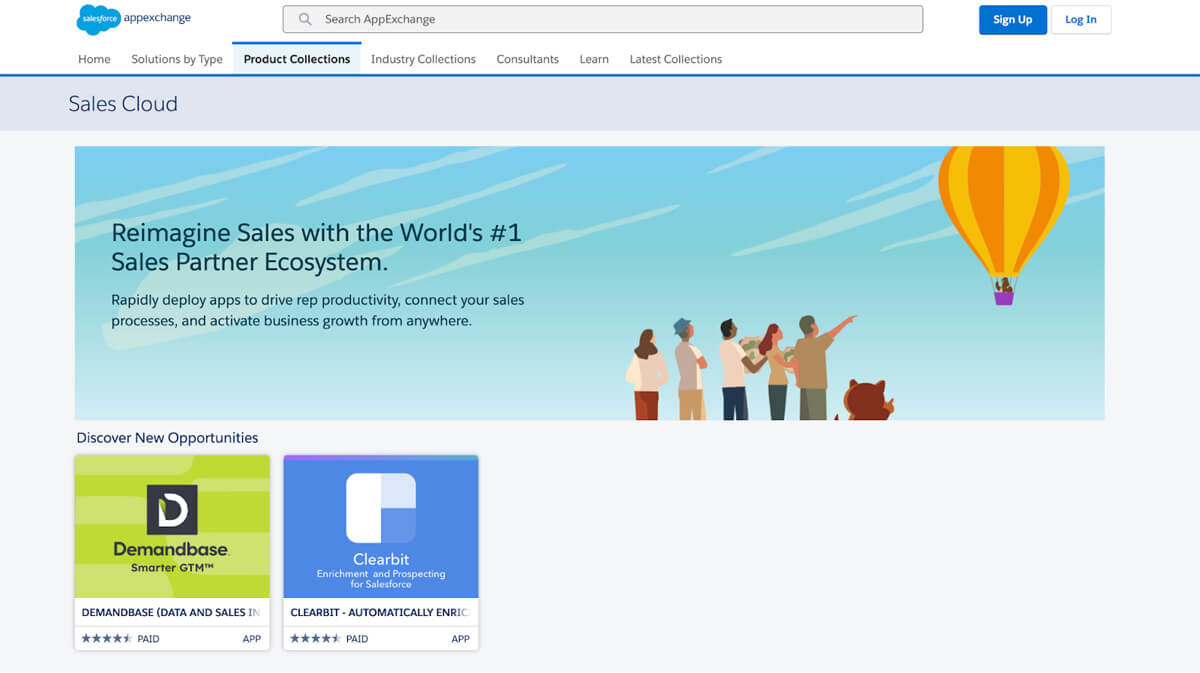
Salesforce AppExchange, meanwhile, boasts more than 7,000 apps that span a range of use cases. Users can learn more about using third-party applications to tailor their CRM to their needs through Trailhead Academy. While subscribers can take advantage of close to 2,000 free applications such as Zoom, Slack, and Asana, most of them cost money to implement via subscriptions.
Who Shouldn’t Use Salesforce & HubSpot CRM?
HubSpot CRM and Salesforce tick the right boxes for a lot of organizations, hence why they’re CRM industry leaders. However, there are reasons not to select HubSpot CRM or Salesforce as your next CRM. These cons don’t take away from the pros of either CRM, but they are important to consider. Ultimately, the best CRM for your business is the one that meets your unique sales needs, and there’s a possibility that HubSpot CRM or Salesforce won’t meet them.
Who Shouldn’t Use HubSpot CRM
The following business types tend not to be a great fit for HubSpot CRM:
- Large and Enterprise Companies: HubSpot CRM doesn’t offer enough customizable elements compared to Salesforce, which may hinder big organizations.
- Mid-Sized Business on a Budget: HubSpot’s free CRM is strong in its own right, but growing companies will want to scale, and upgrades and add-ons are pricey.
- Sales Teams That Need In-Depth Reporting: HubSpot CRM is sufficient when it comes to basic reporting, but its custom reporting tools leave much to be desired.
If you identify with any of the above, don't simply default to Salesforce. For a complete breakdown of the situations where you may want to use or avoid HubSpot, check out our detailed HubSpot CRM review. Then, take a look at who shouldn't use Salesforce below.
Who Shouldn’t Use Salesforce
The businesses and reps below likely won’t get much out of Salesforce:
- Small Businesses and Startups: Salesforce’s robust feature set will be too overwhelming (and expensive) for smaller teams and organizations.
- Sales Reps New to CRMs: Salesforce has a steep learning curve, even for people who are familiar with CRMs, so it’s not recommended as a first-time CRM for most people.
- Companies That Need 24/7 Support: Salesforce offers around-the-clock support, but it costs extra. HubSpot CRM includes this amenity in higher tiers at no additional charge.
However, if these use cases sound like you, don't immediately discount Salesforce. For a full look at Salesforce, check out our detailed and independent Salesforce CRM review.
3 Best Alternatives to Salesforce & HubSpot CRM
HubSpot CRM and Salesforce do many things well, but there’s the possibility that neither is the right fit for your business needs. Whether you’re seeking a more affordable premium CRM or a particular set of sales tools, there are plenty of other options out there. We find the following three CRMs to be the best alternatives to HubSpot CRM and Salesforce.
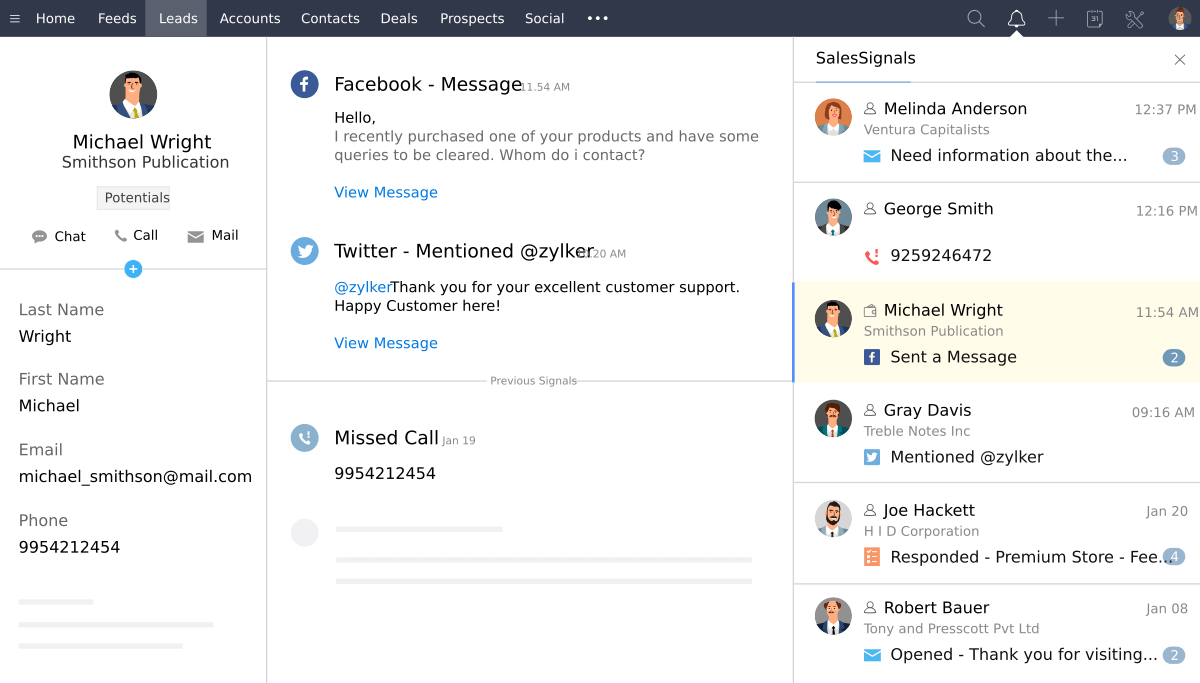
Zoho CRM is an affordable and customizable marketing CRM with multichannel touchpoints and tight social media integration. It offers a free-for-life version for three users and premium paid tiers for a mix of powerful sales and marketing tools, including advanced Zia AI features. However, its extensive customization options might overwhelm CRM newbies. For a more intuitive user interface and easier implementation, check out Freshsales.
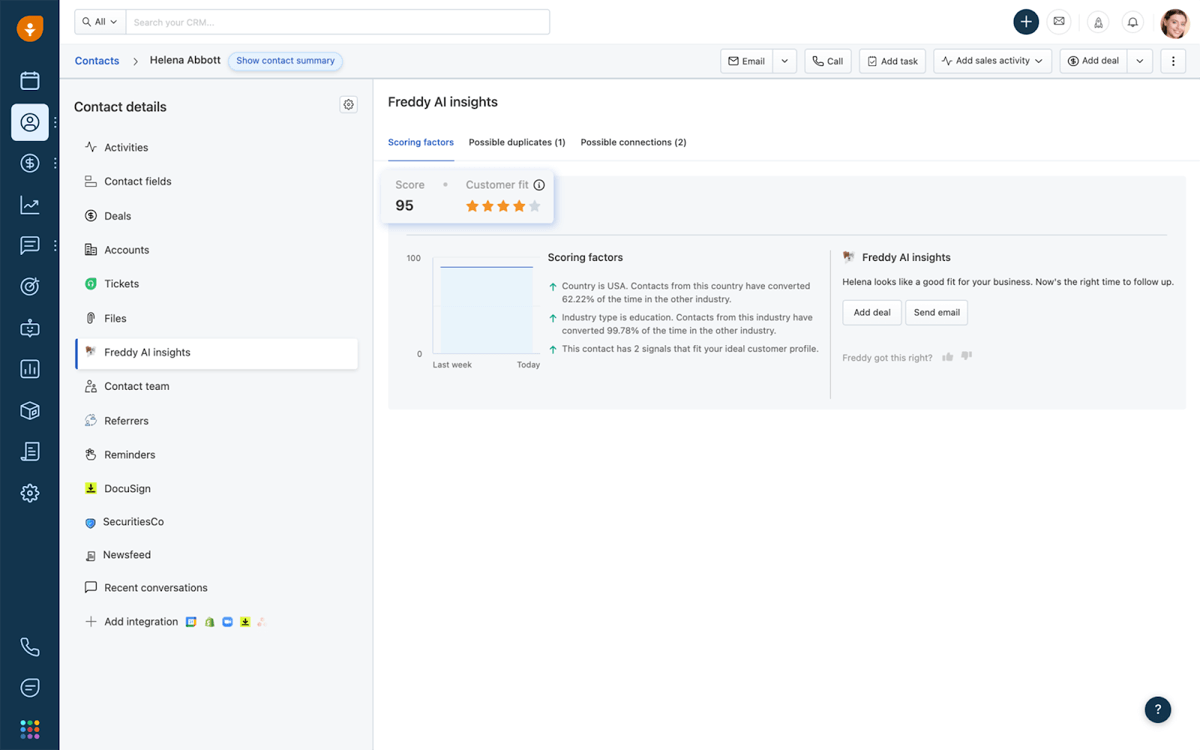
Freshsales is rated as our best general CRM, providing robust AI-powered sales automation at a cost that's lower than most comparable platforms. Its free plan, offered to up to three users, includes contact and deal management and built-in communication tools. Freshsales has great features, but you need to upgrade to higher tiers to get advanced marketing tools. In this case, try Zoho CRM, which has powerful sales and marketing automations even at lower tiers.
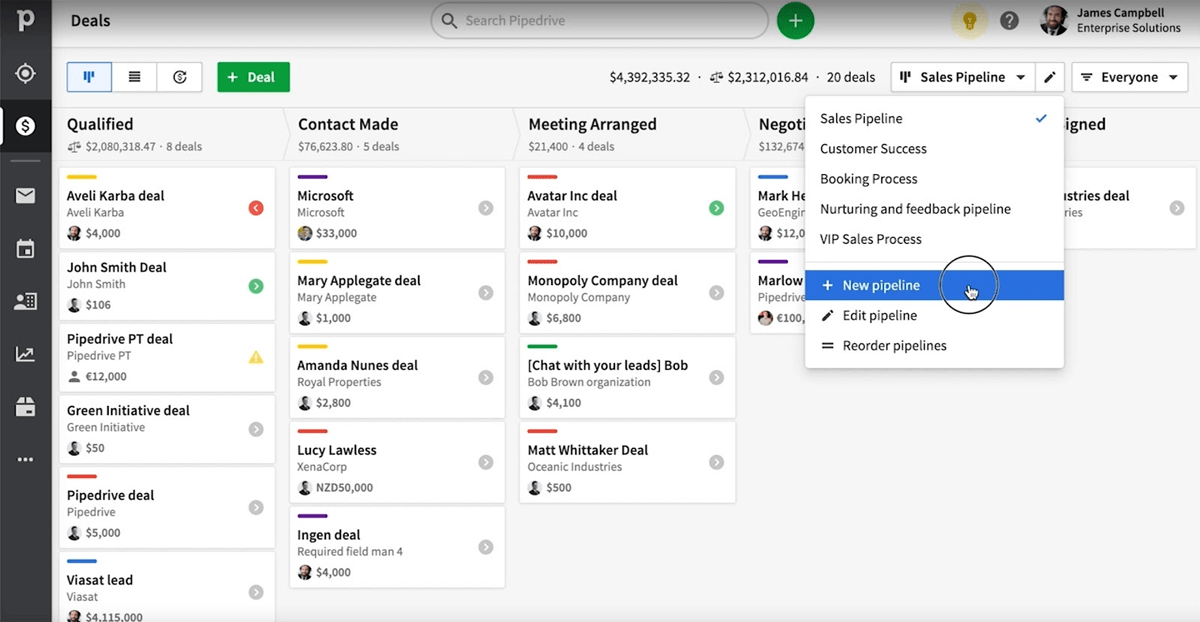
Pipedrive is a user-friendly CRM with visual sales pipelines that make it easy to follow your sales process from start to finish. With plans starting at $14 per month, you can set up and navigate through the platform quickly as it has a gentle learning curve. Use its kanban-style pipelines to track your sales process and customize them using the drag-and-drop tool. But if you’re looking for a CRM with robust AI-powered tools, look into Freshsales instead.
Check out our lists of the best HubSpot CRM alternatives and the best Salesforce alternatives to learn about their competitors and decide which is right for you. There, you'll find the additional CRM options' use cases, pricing, features, and more.
How We Evaluated Salesforce vs HubSpot CRM
In highlighting the differences between the two platforms, we first identified five key criteria businesses consider most when choosing CRM software. From there, we determined weighted subcriteria per category and assigned an overall score out of five to determine a winner for each one.
Evaluation Criteria
We started by scoring the pricing and core features of each option, as these factors are crucial to businesses seeking an affordable platform that provides a robust set of CRM features. We also looked into each platform's ease of use, customization capabilities, and third-party app integrations. Lastly, we assessed the customer support solutions offered by each CRM.
We looked at each CRM’s starting and enterprise-level cost, availability of free versions, access to add-on features, and monthly/yearly billing plans.
We combed through both platforms for essential CRM features such as contact management, pipelines, workflow automations, and sales forecasting.
This takes into account the learning curve associated with HubSpot CRM and Salesforce based on user reviews on certified sites. We also looked into the availability of knowledge bases, community forums, and certifications.
We assessed how flexible both CRMs are in terms of their customizable elements for pipelines, deal stages, reports, and more.
Here, we assessed how each CRM syncs with applications for Google, email, scheduling, social media, and document management.
This covers each CRM’s available service hours via phone, email, and live chat. We also looked at real user feedback across certified sites.
Bottom Line: Salesforce vs HubSpot CRM
Salesforce is the clear winner when it comes to features and customization, but HubSpot CRM reigns supreme in affordability and usability. Ultimately, the best CRM for your business adequately addresses your pain points, fits within your budget, and is fully adopted by your intended end users. Before deciding which option suits your needs, read in-depth reviews like this one, sign up for free trials or demos, or read our detailed guide on the best CRMs.
This article was written by Alison Barretta and updated by Kezia Jungco.
